Sustainability
Pallet mulch: what it is, and what we will not sell it for
It is an excellent landscaping product and a poor vegetable garden product, and we would rather say so than sell you the wrong thing.
Request a quote
Talk to the people who wrote this
Same form, same inbox. Technical questions get answered whether or not there is an order attached.
In short
Pallet mulch is ground, screened and coloured hardwood recovered from pallets that could not be repaired or dismantled for lumber. It holds colour well and breaks down more slowly than bark mulch, which makes it good for ornamental landscaping.
We do not sell it for vegetable gardens. Our inbound stream is screened but cannot be guaranteed free of painted or chemically treated wood, and for edible beds that uncertainty is not acceptable.
How it is made
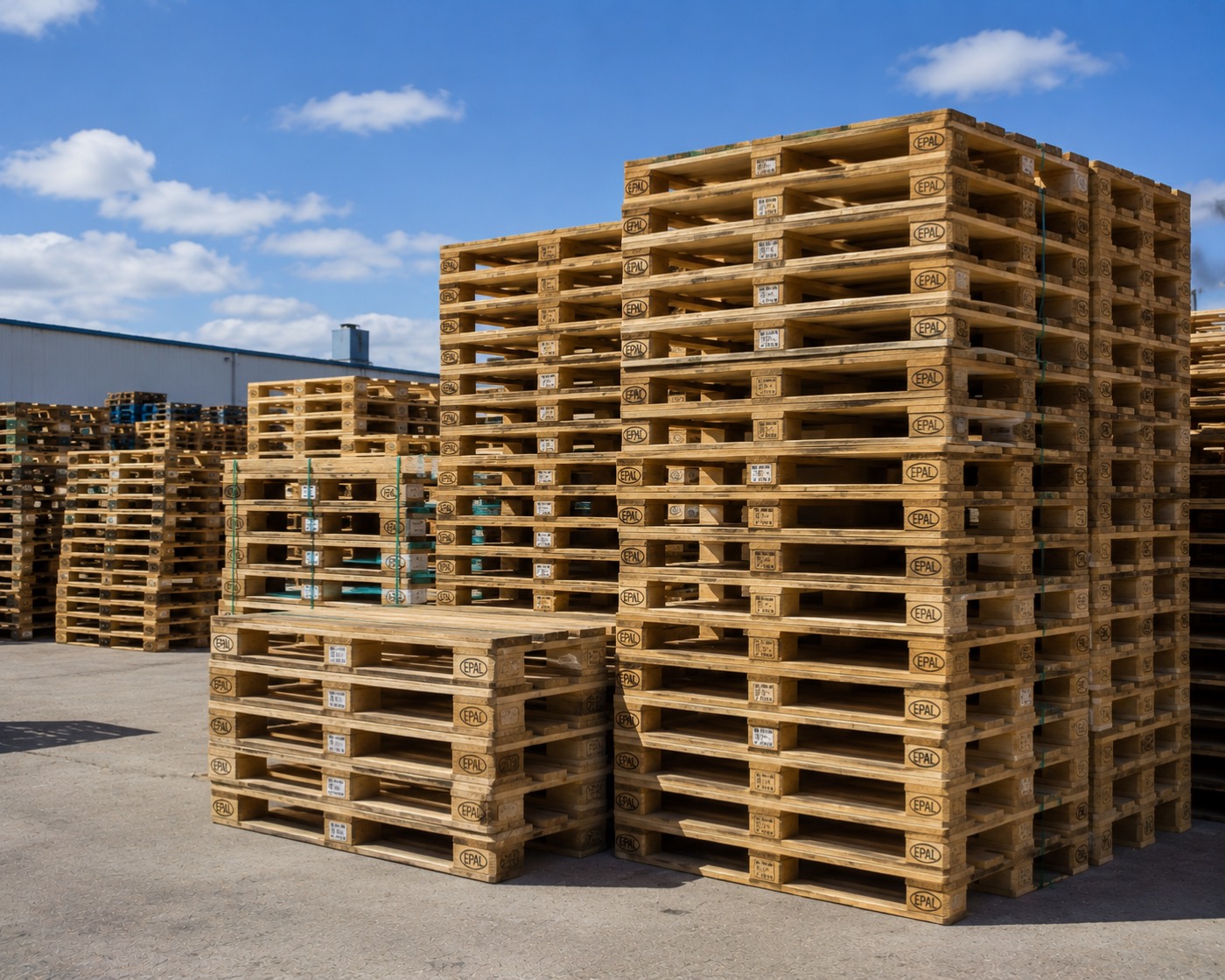
It starts as the residue of the sorting process: pallets too far gone to repair and too damaged or contaminated in structure for lumber recovery, plus the offcuts from dismantling.
That material is ground, then screened to size — mulch buyers care about consistency, and an unscreened grind contains everything from dust to fist-sized chunks. Screened material is then coloured with iron-oxide or carbon-based colourants in natural, black, brown and red.
Steel comes out on the way through, under magnets on the outfeed. This matters more than the small scrap revenue suggests: steel in mulch damages mowers, punctures tyres and ends a landscaping contract permanently.
Why it outlasts bark mulch
Pallet mulch is made from structural hardwood — oak, maple, gum — rather than from bark and softwood residue.
Denser wood decomposes more slowly, so a hardwood mulch bed holds its depth and colour longer through a season than a comparable bark product. For a landscape contractor that means fewer top-ups, which is usually the dominant cost.
The trade-off is nutrient contribution. Bark and finer organic mulches break down faster and feed the soil sooner. Hardwood mulch is doing a different job: weed suppression, moisture retention and appearance over a longer period.
The vegetable garden question, answered honestly
We get asked this regularly and the answer is no.
The inbound pallet stream is industrial. It is screened at intake and visibly painted or chemically stained material is rejected — but 'screened' is not 'guaranteed'. Treated wood, painted wood and wood that carried something it should not have can pass a visual inspection.
For ornamental landscaping that residual uncertainty is acceptable. For a bed growing food that people eat, it is not, and no price advantage makes it acceptable.
If you are mulching a vegetable garden, buy certified garden mulch from a supplier who can document the feedstock. That is a genuinely different product and we do not make it.
Buying it
Sold by the cubic yard, loaded at the yard or delivered across Central Ohio. Contractor pricing applies above a threshold volume.
Two practical notes. First, colour fades — all mulch does, and darker colours hold longer than red. Second, order by volume rather than by weight; moisture content varies and weight-based ordering produces surprises in both directions.
Details on the reclaimed lumber and mulch page, and the process it comes out of in inside pallet recycling.
Takeaways
- Pallet mulch is structural hardwood, so it holds depth and colour longer than bark mulch.
- Magnets on the grinder outfeed keep steel out — a quality control step, not a revenue line.
- It is not suitable for vegetable gardens and we will not sell it as such.
- Order by volume rather than weight; moisture content makes weight unreliable.
Questions
Asked and answered
Is pallet mulch safe for vegetable gardens?
We do not recommend it. The inbound stream is screened but cannot be guaranteed free of painted or treated wood. For edible beds, buy certified garden mulch with documented feedstock.
Does pallet mulch last longer than bark mulch?
Generally yes. It is made from structural hardwood rather than bark and softwood residue, so it decomposes more slowly and holds colour and depth longer through a season.
Written by
Dale Whitmer
Yard Manager
Runs the grading line and the repair bay. Has graded more pallets than he can estimate and still argues about deck coverage.
Disagree with something here? That is genuinely useful to us — several of these articles exist because a customer told us we had it wrong. Use the form at the top of the page or write to the yard directly.
Terms used here
Definitions live in one place so they cannot drift. Full list in the pallet glossary.
- Base
- The lowest structural layer of a pallet — bottom deck boards or, on a skid, the runners themselves.
- Dismantling
- Cutting a pallet apart to recover usable deck boards and stringers, usually on a band saw.
- Hardwood
- Wood from broadleaf trees — oak, maple, poplar, gum. Denser and more durable than softwood for pallet use.
- Softwood
- Wood from coniferous trees — pine, spruce, fir. Lighter and cheaper than hardwood; southern yellow pine dominates new pallet production.
More in Sustainability
Keep reading
Related notes
What zero landfill actually requires
We did not achieve zero landfill by deciding to. We achieved it by buying four things and signing one contract.
Yard notesThe economics of dismantling
Two operators, the same pallet, the same saw. One recovers six usable boards and the other recovers three. That gap is the business.
SustainabilityReuse beats recycling, and the gap is bigger than you think
Any recycler can move you from landfill to mulch and call it a programme. Getting to reuse is the actual work.