Products · recovered material
Reclaimed lumber, mulch & recovered material
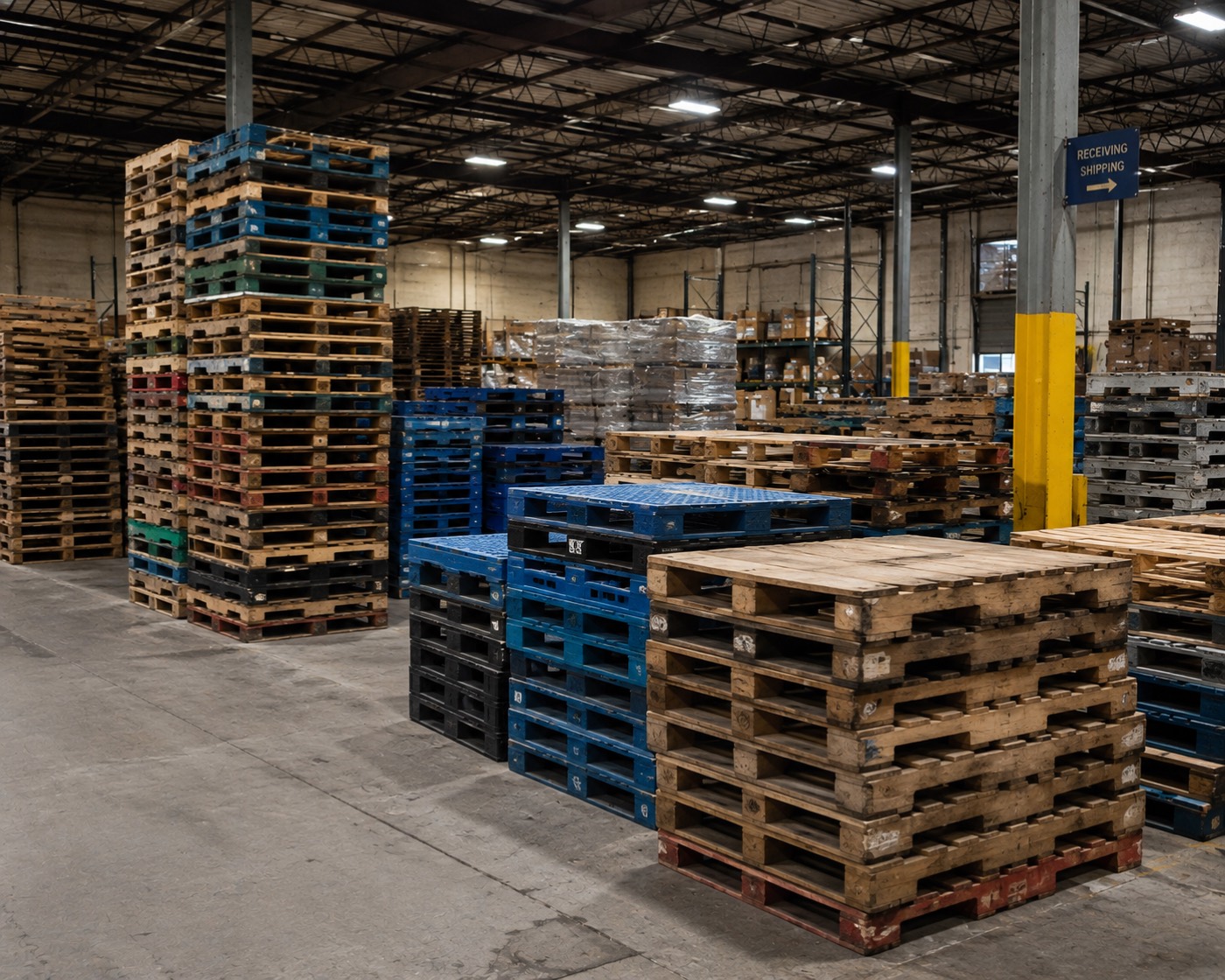
About one in five inbound pallets cannot be saved as a pallet. None of it goes to landfill. This page is what happens to the rest — and it is a product line, not a waste stream.
Request a quote
Tell us what you need
Send this and a real person in the Columbus yard reads it. Most quotes go out the same business day.
In short
Reclaimed pallet material is everything recovered when a pallet is dismantled rather than repaired: usable deck boards, cut stringers, ground wood for coloured landscape mulch and boiler fuel, and magnet-recovered fasteners sold as scrap steel. RePallets Ohio sells all of it from the Columbus yard.
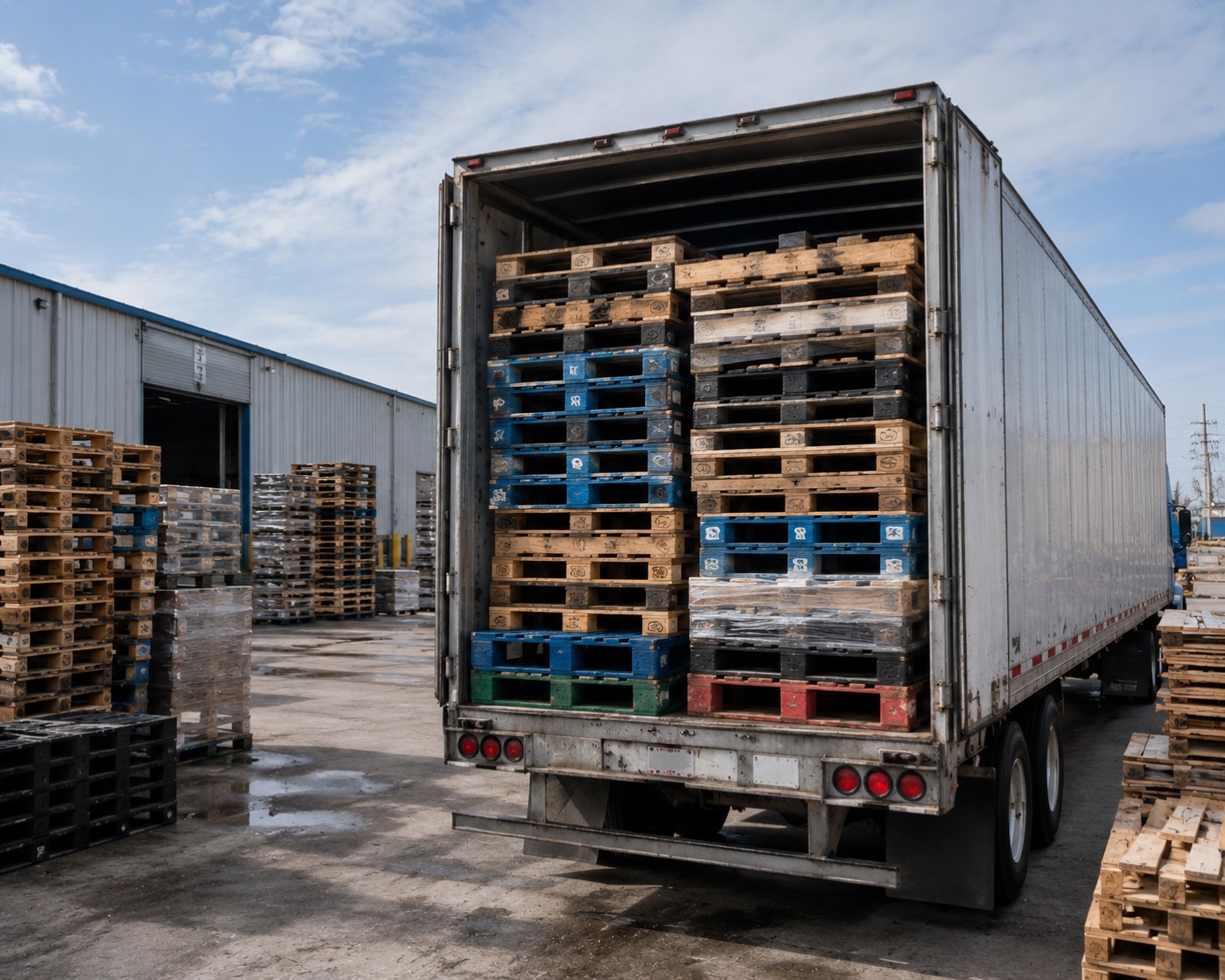
This is the tail end of a zero-landfill route. Roughly 94% of inbound mass leaves as a pallet or component; the remaining 6% leaves as mulch, fuel or steel. See our sustainability position.
Reclaimed deck boards and cut stringers
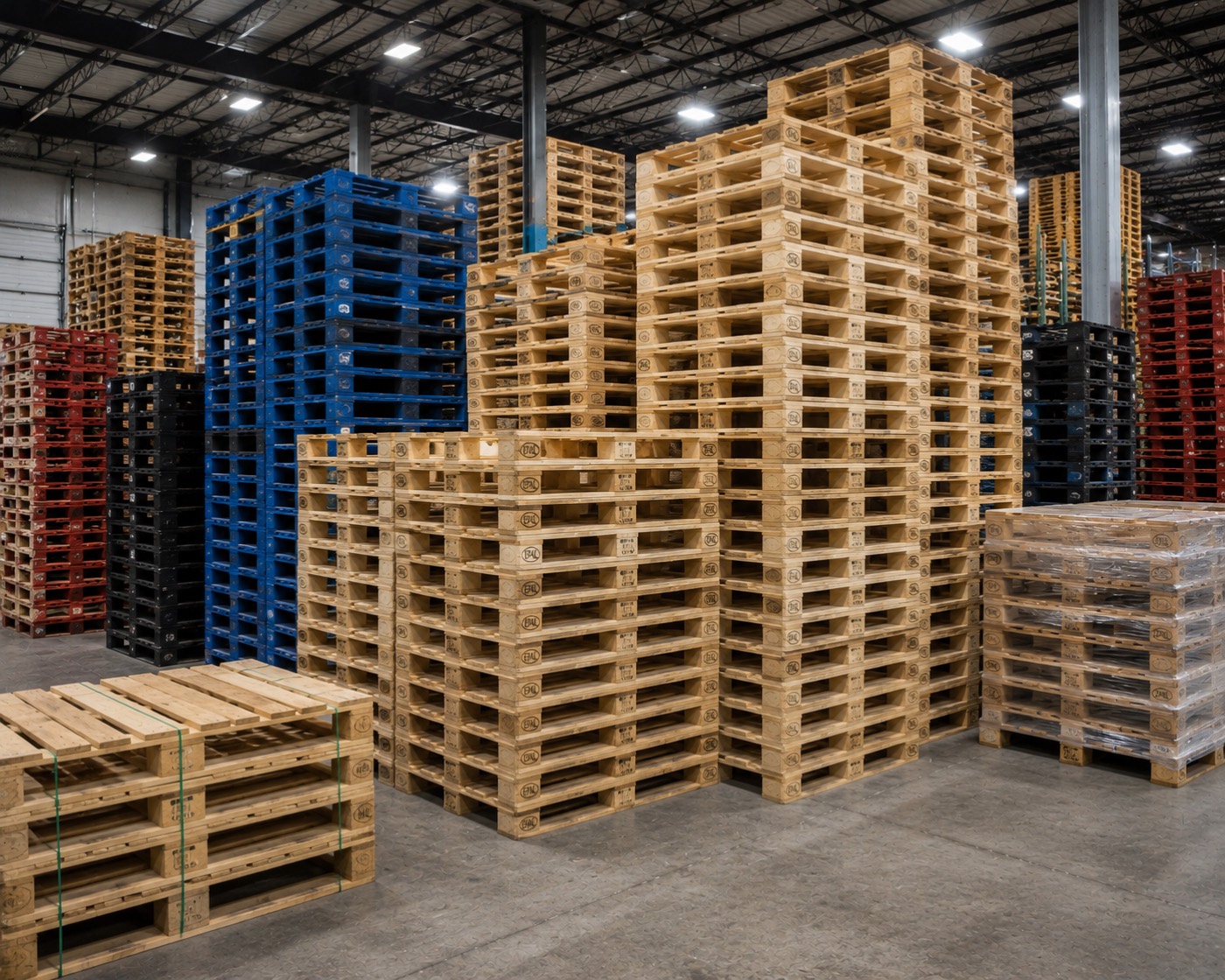
When a pallet is dismantled on the band saw, deck boards come off in usable lengths and stringers are cut back past the notches. Both are sorted by species, length and condition.
This material has a devoted following among makers, small fabricators and construction crews. It is dry, hard, dimensionally settled, frequently oak, and costs a fraction of new lumber. It also carries genuine character — nail shadow, stain, saw marks — which is why furniture builders and interior fit-out crews keep coming back.
- Deck boards: typically 3½″ wide, 5/8″ thick, 32″–48″ long
- Cut stringers: 1⅜″ × 3½″, 30″–44″ usable length
- Mixed hardwood and SYP, sold sorted or unsorted
- Sold by the bundle or by the pickup load
Note: this material has been in industrial service. It is not food-safe, and it should be sanded and sealed before interior use. We will tell you the same thing on the phone that we tell you here.
Coloured landscape mulch
Wood too broken or contaminated for lumber recovery is ground, screened and coloured. The result is a double-ground hardwood mulch that holds colour well and breaks down more slowly than bark mulch.
- Natural, black, brown and red
- Sold by the cubic yard, loaded on site
- Landscape contractor pricing on volume
- Delivery available across Central Ohio
A fair question we get asked: is pallet mulch safe for gardens? For ornamental landscaping, yes. We do not sell it as a soil amendment for edible gardens, because the inbound stream can include treated and painted material that we screen for but cannot guarantee is entirely absent. If you are mulching a vegetable bed, buy certified garden mulch instead.
Biomass and boiler fuel
Ground wood not suitable for mulch goes to biomass fuel. It has a consistent moisture content, a known species mix and no plastic contamination, which makes it a straightforward feedstock for industrial boilers and co-generation.
We supply regional biomass users under standing agreements. If you operate a wood-fired boiler in Ohio and want a consistent supply, get in touch — this is a lane where reliability matters far more than price.
Scrap steel recovery
Every dismantled pallet releases between forty and eighty fasteners. Those pass under magnets on the grinding line and are recovered as scrap steel.
It is not a large revenue line, but it matters for two reasons. It keeps steel out of the mulch, which protects the customer's equipment and the customer's tyres. And it closes the last open loop in the process, which is the whole point of the exercise.
Buying reclaimed lumber: what you are actually getting
This material has a devoted following and it also generates the most misunderstandings of anything we sell, so here is a plain description.
What it is. Deck boards and cut stringers recovered when a pallet is dismantled. Typically 3½″ wide and 5/8″ thick for deck boards, 32″–48″ long; stringers are 1⅜″ × 3½″ with 30″–44″ of usable length after the notches are cut back.
What it looks like. Dry, hard, dimensionally settled, frequently oak or mixed hardwood. Nail shadow, stain, saw marks, colour variation. That character is the reason people want it.
What it is not. It is not dressed lumber, it is not consistent in width or thickness between bundles, and it is not food-safe. It has been in industrial service.
How it is sold. By the bundle or by the pickup load, sorted or unsorted. Bring a truck or trailer.
Working with reclaimed pallet wood safely
We would rather say this clearly than have somebody discover it with a table saw.
- Hidden fasteners are the main hazard. Even carefully dismantled boards can retain nail shanks or fragments. Use a metal detector before machining. A single missed nail destroys a planer knife or a bandsaw blade.
- Sand and seal before interior use. Industrial dust, oils and unknown residues sit on the surface. Sanding and sealing addresses both appearance and exposure.
- Do not use for food contact. Cutting boards, serving surfaces, anything touching food. The inbound stream cannot be characterised well enough for that.
- Do not burn treated or painted material. If a board is painted or shows chemical staining, it does not go in a stove.
- Check for ISPM-15 marks. A stamped board has been heat treated, which is harmless. It is also a useful signal that the pallet was export stock.
- Expect movement. The wood is at ambient equilibrium, not kiln-dry to furniture standards. Let it acclimatise indoors before building.
Mulch: specifying and ordering it
- Order by volume, not weight. Moisture content varies substantially and weight-based ordering produces surprises in both directions. We sell by the cubic yard.
- Colour choice affects fade rate. Darker colours hold longer through a season; red fades fastest under Ohio sun.
- Depth. Two to three inches for weed suppression on established beds. Deeper is not better — it holds moisture against stems.
- Timing. Demand peaks March to May. Ordering in that window means competing with every landscape contractor in Central Ohio; ordering slightly outside it is easier and often cheaper.
- Delivery or collection. Loaded at the yard or delivered across Central Ohio. Contractor pricing above a threshold volume.
And the recurring question, answered again because it matters: not for vegetable gardens. The inbound stream is screened but cannot be guaranteed free of painted or treated wood. For edible beds, buy certified garden mulch. See pallet mulch: what it is and what we will not sell it for.
Spec sheet
Recovered material reference
| Reclaimed deck boards | 5/8" × 3½" nominal, 32"–48", mixed hardwood or SYP |
| Cut stringers | 1⅜" × 3½", 30"–44" usable |
| Mulch — grind | Double ground, screened |
| Mulch — colours | Natural, black, brown, red |
| Mulch — unit | Cubic yard, loaded or delivered |
| Biomass fuel | Ground wood, consistent moisture, steel-free |
| Scrap steel | Magnet-recovered fasteners, sold to regional processors |
| Landfill | Zero tons in the last three years |
Reference
Recovered material, use by use
| Material | Typical dimensions | Best used for | Not suitable for |
|---|---|---|---|
| Reclaimed deck boards | 3½" × 5/8" × 32–48" | Cladding, shelving, crates, repairs | Food contact; structural spans |
| Cut stringers | 1⅜" × 3½" × 30–44" | Runners, blocking, framing, furniture legs | Long spans; food contact |
| Mixed hardwood offcuts | Variable | Craft, kindling, small joinery | Anything needing consistency |
| Coloured mulch | Screened grind | Ornamental landscaping | Vegetable gardens |
| Biomass fuel grind | Screened, steel-free | Industrial wood-fired boilers | Domestic stoves |
| Recovered fasteners | Mixed steel | Scrap steel processing | Reuse |
Avoid these
Mistakes we see
Machining reclaimed boards without a metal detector
Retained nail shanks are the most common hazard in reclaimed pallet wood and the most expensive. One missed fastener ruins planer knives or a bandsaw blade and can throw fragments.
Using pallet wood for food-contact projects
The inbound stream is industrial and cannot be characterised well enough. Cutting boards, serving surfaces and food storage should use documented lumber.
Mulching a vegetable bed with pallet mulch
Screened is not guaranteed. For ornamental landscaping it is excellent; for anything you intend to eat, buy certified garden mulch with documented feedstock.
Ordering mulch by weight
Moisture content varies enormously, so weight is a poor proxy for volume. Order by the cubic yard and specify depth rather than tonnage.
Building indoors without acclimatising
Reclaimed pallet wood sits at ambient outdoor equilibrium, not at interior humidity. Bring it inside and let it settle before building, or expect movement afterwards.
Checklist
Work through this before you order
Collecting reclaimed lumber
- Bring a truck or trailer and straps
- Ask for sorted if consistency matters; unsorted is cheaper
- Gloves — this material splinters
- Metal detector before any machining at home
- Plan to sand and seal anything going indoors
- Let it acclimatise indoors before building
Ordering mulch
- Measure the area and decide depth (2–3 inches typical)
- Order by the cubic yard
- Choose colour with fade rate in mind
- Confirm delivery ZIP or arrange collection
- Ornamental beds only — not vegetable gardens
Questions
Before you ask us
Can I buy pallet wood for a woodworking project?
Yes. We sell sorted deck boards and cut stringers by the bundle. Bring a truck or trailer. Understand that this wood has been in industrial service, may contain hidden fasteners, and should be sanded and sealed before interior use.
Is pallet mulch safe for vegetable gardens?
We do not recommend it. Our inbound stream is screened, but it can include painted or chemically treated wood that we cannot guarantee is entirely absent. For ornamental landscaping it is excellent; for edible beds, buy certified garden mulch.
Do you deliver mulch?
Yes, across Central Ohio, by the cubic yard. Contractor pricing applies above a threshold volume. Ask on the quote form and include your delivery ZIP code.
What percentage of inbound wood is actually landfilled?
None. Roughly 94 percent of inbound mass leaves as a pallet or a component, and the balance leaves as mulch, biomass fuel or recovered steel. We have not sent pallet wood to landfill in three years.
How much reclaimed lumber comes out of one pallet?
Typically seven to ten usable deck boards and two or three usable cut stringers, depending on condition and on how carefully the pallet is dismantled. Cut placement matters enormously — half an inch decides whether a board is stock or scrap.
Do you deliver reclaimed lumber?
Bundles can go out on scheduled deliveries across Central Ohio. Small quantities are usually collection, because the freight cost outweighs the material value.
Is the wood kiln dried?
It has been seasoned in service rather than kiln dried to furniture standards. It sits at ambient equilibrium, which makes it dimensionally settled but not as dry as cabinet stock. Acclimatise it indoors before building.
Can I buy whole pallets to take apart myself?
Yes. Unsorted cores are the cheapest way to buy pallet wood by volume, though you take on the grading and the dismantling. Expect a proportion to be beyond useful recovery.
Where does the scrap steel go?
To regional scrap processors. It is a small revenue line and an important quality control step — steel left in mulch damages customer equipment and would close that outlet entirely.
Keep going
Related pages