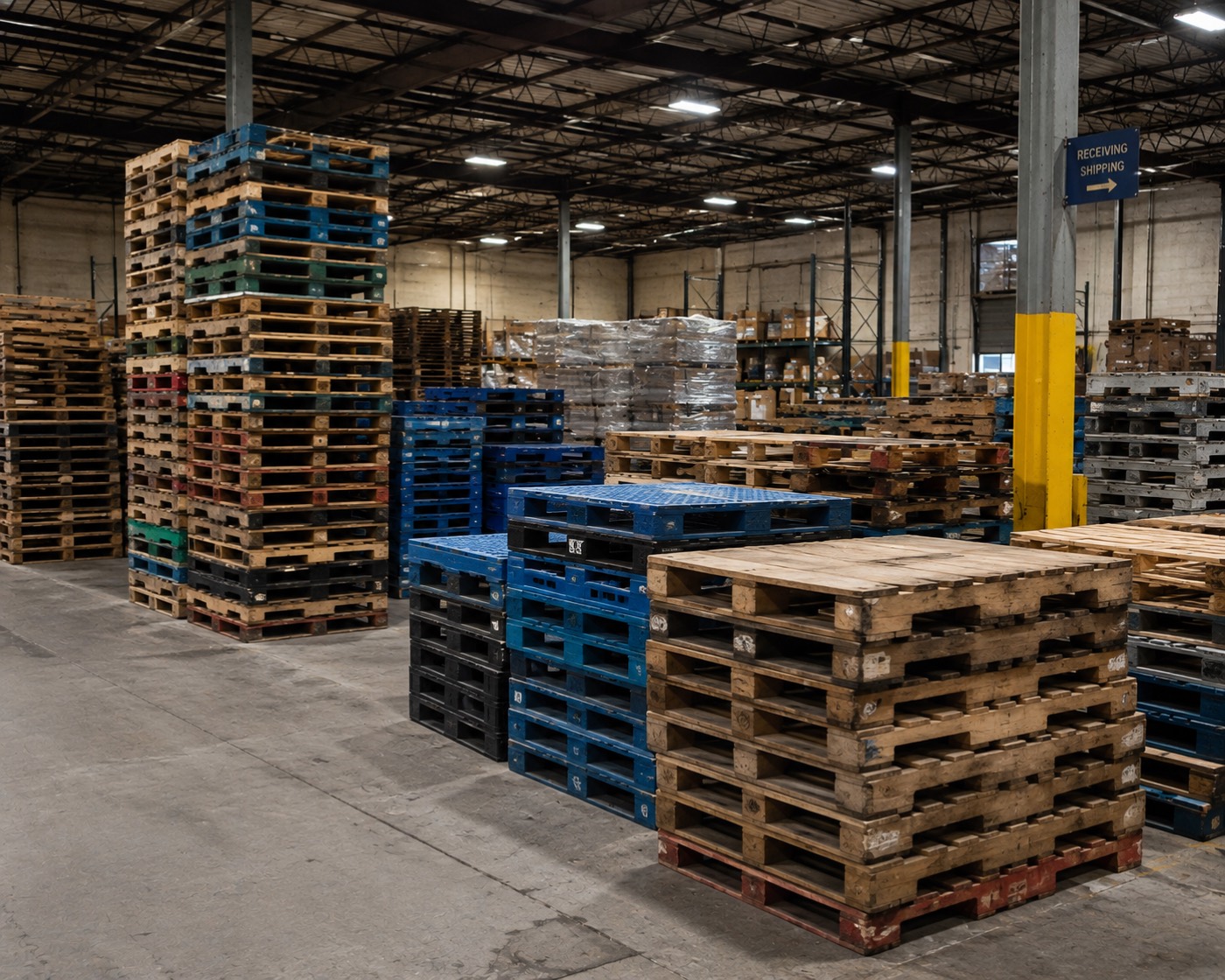
Services · recovery
Sell us your pallets
The stack behind your building is inventory, not waste. We buy it, we collect it, and we pay for it — per core, on grade, with the count agreed on the ground.
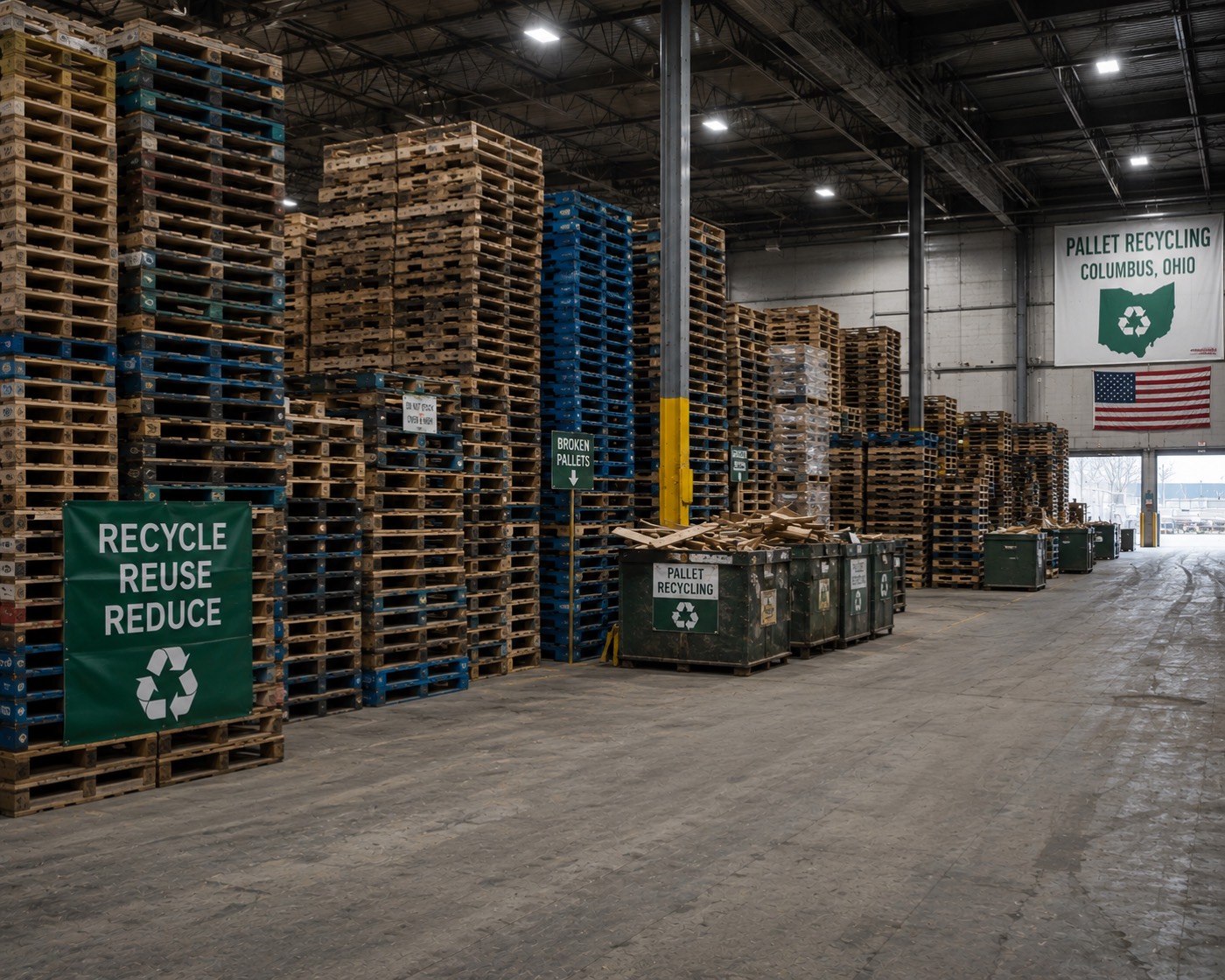
Request a quote
Tell us what you need
Send this and a real person in the Columbus yard reads it. Most quotes go out the same business day.
In short
RePallets Ohio buys used pallets across Ohio in truckload and partial-load quantities. We pay per core against grade, collect on our own equipment, and agree the count on the ground before the driver leaves. Sorted 48×40 GMA cores carry the highest value; mixed and odd-size loads are still worth money.
If your volume is small or your stock is damaged, the service may be free removal rather than a payment. We tell you which before we schedule.
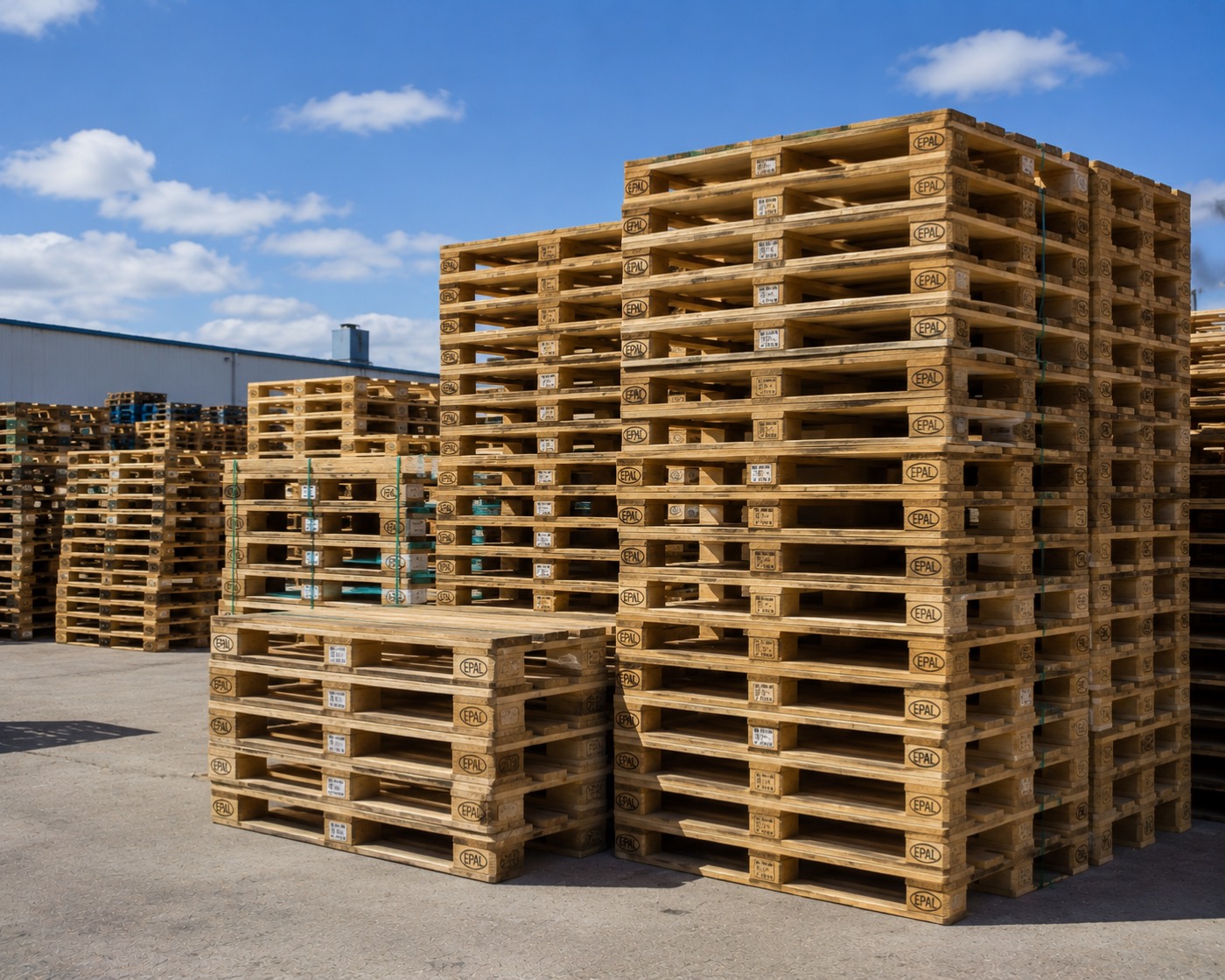
What we pay for, and what moves the number
Core pricing is not a mystery. Four variables set it.
- Footprint. 48×40 GMA has the deepest resale market in North America and always prices best. 42×42, 48×48 and 40×48 follow. Genuinely odd sizes are bought for lumber recovery, not resale.
- Condition. Whole pallets with intact stringers are worth several times a broken core. Rot, mold and heavy water damage take a pallet out of the recoverable stream entirely.
- Sorting. A load pre-sorted by size and condition saves us handling and earns you more. If you can stage 48×40s separately, do.
- Volume and access. A full truckload from a dock with a forklift beats forty pallets in a yard behind a locked gate. Access genuinely affects price.
How the process runs
- You send numbers. Approximate count, sizes, condition and a photograph if you have one. The quote form at the top of this page is enough.
- We quote per core. Firm, in writing, valid for a stated window. No 'market adjustment' after collection.
- We schedule. Usually within a few working days in Central Ohio; scheduled lanes elsewhere in the state.
- We count on the ground. The driver counts with your person present. Discrepancies get resolved on site, photographed, before anyone signs.
- We pay. On agreed terms. For ongoing relationships, most customers take the value as a credit against pallet purchases, which is simpler for everybody.
Turning a cost line into a revenue line
Plenty of operations pay a waste hauler to take pallets away. That is not just a missed opportunity, it is a double loss: you pay for disposal and you forgo the core value.
A distribution centre receiving 800 pallets a week and disposing of them is throwing away a five-figure annual sum before you count the disposal invoices. The fix takes one conversation.
Better still, combine it: we deliver good stock on the outbound leg and take your cores on the return. One truck, two transactions, materially lower cost on both. Ask for a two-way lane on the form.
What we cannot buy
Honesty here saves everyone a wasted trip.
- Pallets that are wet, moldy or have been stored outdoors uncovered through a winter
- Chemically contaminated stock, or pallets with unidentified residue or staining
- Painted or heavily treated wood beyond ISPM-15 marking
- Loads mixed with general waste, film, banding and rubbish
- Pallets that have carried hazardous material without documented decontamination
If you are unsure, send a photograph. Two minutes of looking beats a rejected load.
What moves the per-core price, in order
We quote firm per core rather than publishing a rate, because the rate for one load would be wrong for most others. Five things set it.
- Footprint. 48×40 GMA has the deepest resale market in North America and always prices best. The 42 and 48 families follow. Genuinely odd sizes are bought for lumber recovery, not resale, and priced accordingly.
- Condition. Whole pallets with intact stringers are worth several times a broken core. Rot, mold and heavy water damage take a pallet out of the recoverable stream entirely.
- Sorting. A load staged by size and condition saves us handling, and that saving is shared.
- Volume. A full trailer amortises the trip. Forty pallets in a yard behind a locked gate does not.
- Access. Forklift reach and trailer turning are genuinely part of the price, because loading time is cost.
Fifteen minutes that changes the price
This is the most useful thing on this page. These habits routinely move a load from 'free removal' to 'we pay you', and none of them cost anything.
- Stack them. Loose pallets take about three times as long to load.
- Keep them dry and off the ground. Two sacrificial pallets underneath protect everything above.
- Separate 48×40 GMA into its own stack. Mixed into odd sizes, the whole load gets assessed down.
- Broken pallets in their own stack, not distributed through the good ones.
- Keep film, banding, cardboard and general waste out. Contamination is a cost, not a nuisance.
- Leave forklift access and trailer turning room.
Detail in how to stack pallets outdoors.
Reference
What your load is likely worth
| Load description | Likely outcome |
|---|---|
| Sorted whole 48×40 GMA, dry, stacked, 200+ | We pay you, top of range |
| Mixed standard footprints, mostly whole, stacked | We pay you |
| Mixed condition, mixed sizes, reasonable volume | Free removal |
| Mostly broken, standard footprints | Free removal or small fee |
| Wet or overwintered uncovered | Fee likely — value largely gone |
| Mixed with film, banding and general waste | Fee, or declined until separated |
| Odd footprints, sound condition | Modest payment — bought for lumber recovery |
| Chemically stained or unidentified residue | Declined |
We tell you which category you are in before scheduling, not after the truck arrives.
Avoid these
Mistakes we see
Paying a waste hauler to remove pallets
The most expensive habit in this industry. You pay the disposal fee and forgo the core value in the same transaction. A site generating 800 pallets a week is losing a five-figure annual sum before the invoices are counted.
Letting the pile overwinter
Value falls every month a stack sits outdoors uncovered. A pile worth real money in October is worth a fraction of it by April — absorbed water, freeze-thaw and spring mold.
Mixing broken pallets through good ones
It makes the whole load look worse than it is, and assessment works on what the load looks like. Two stacks instead of one is fifteen minutes.
Assuming small volumes are not worth collecting
Below about forty pallets a dedicated trip does not pay — but small volumes can often be folded into an existing scheduled route. Ask rather than assume.
Not asking for a two-way lane
If you also buy pallets, the same truck should do both. That removes the collection trip and the disposal cost simultaneously.
Checklist
Work through this before you order
Before you contact us
- Approximate count
- Footprints, roughly — how many are 48×40
- Condition: mostly whole, mixed, mostly broken
- Dry or stored outdoors, and for how long
- A photograph — this settles most questions instantly
- Forklift availability and trailer access
- How fast the pile grows, for cadence
Questions
Before you ask us
How much do you pay per pallet?
It depends on footprint, condition, sorting and volume. Sorted whole 48x40 GMA cores earn the most; mixed odd-size loads earn less but still have value. We quote firm per core in writing rather than publishing a number that would be wrong for most loads.
Do I need to sort the pallets first?
No, but sorting increases what you earn. If you can stage 48x40s separately from everything else and keep broken pallets in their own stack, the quote improves.
What is the minimum quantity you will collect?
In Central Ohio we will look at anything from about forty pallets. Below that, collection cost outweighs core value, though we can often fold small volumes into a scheduled route.
How quickly can you collect?
Usually within a few working days in Central Ohio. Elsewhere in the state, collection follows our scheduled lanes, typically within a week.
Do you pay cash on collection?
Payment is on agreed terms rather than cash at the gate. For ongoing relationships most customers take the value as a credit against pallet purchases, which is simpler for both sides and avoids two sets of paperwork.
What if the count differs from our records?
The count is made physically on the ground with your representative present, before anyone signs, and discrepancies are photographed and resolved there. That is the whole reason the process works that way — see why we count on the ground.
Will you buy pallets that have been stored outside?
It depends on how long and how well. Covered, off the ground and stacked square, usually yes. Uncovered through an Ohio winter, often not — the value has largely gone into the ground with the water.
Can you collect from multiple sites?
Yes. Multi-site collection is one of the main reasons operations move to a managed programme, because it consolidates scheduling, reporting and invoicing into one relationship.
Keep going
Related pages