Sizes · grading
Pallet grades explained
Grading is the least standardised part of this industry and the most common cause of a disappointing delivery. Here is our definition, in writing, so you can hold us to it.
Request a quote
Tell us what you need
Send this and a real person in the Columbus yard reads it. Most quotes go out the same business day.
In short
Pallet grades describe the structural condition of a used pallet. Grade A (also called #1) has original unrepaired stringers, seven or more top deck boards and no significant damage. Grade B (#2) may have a repaired or companion stringer and replaced boards. Combo is an agreed mix of the two. Cores are unsorted as-received pallets.
There is no enforced industry standard behind these terms, which is exactly why you should get any grade definition in writing before ordering. Ours is below.
Grade A / #1 — the racking grade
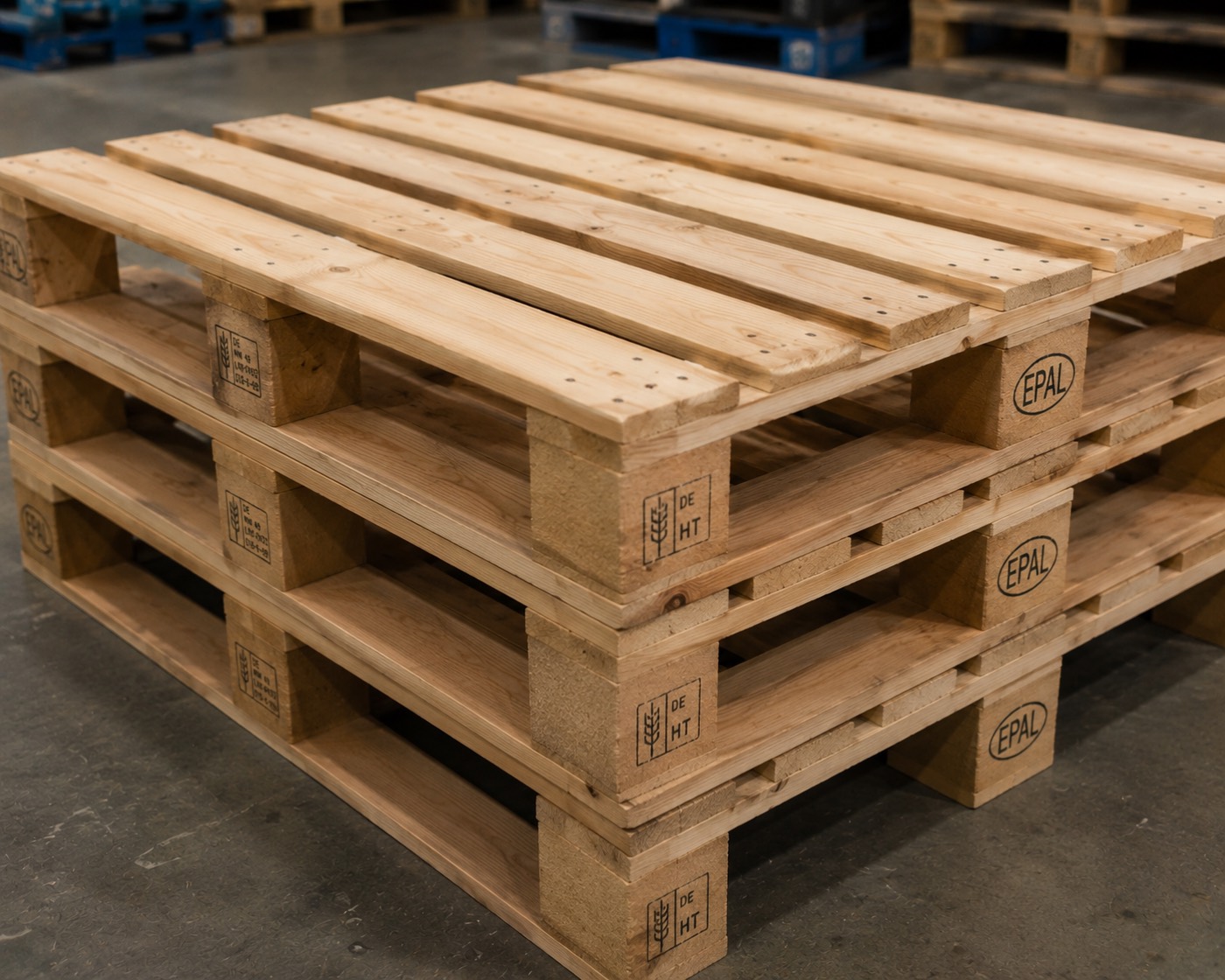
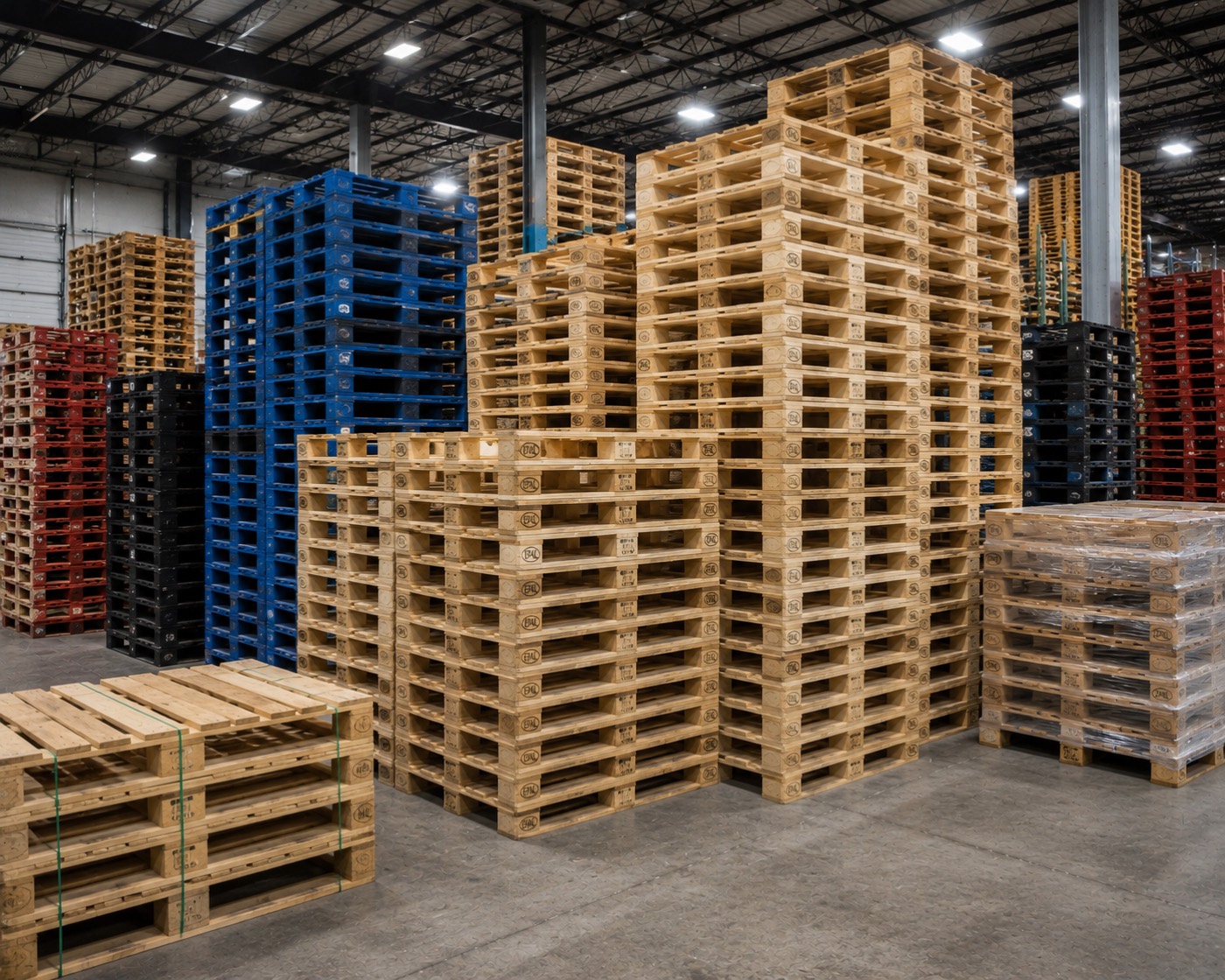
A Grade A pallet has never been structurally repaired. All three stringers are original, uncracked, unplugged and without companions. The top deck carries seven or more boards with consistent spacing. There are no protruding fasteners, no rot, no mold, and no more than light surface staining.
This is the only reclaimed grade we will describe as racking-capable, and even then we say it with a caveat: racking capacity is a property of your rack design and your load, not just of the pallet. Get your own engineering sign-off. See load capacity.
Roughly thirty percent of our inbound cores end up here.
Grade B / #2 — the workhorse
Grade B allows one repaired stringer — plugged, or fitted with a glued and nailed companion — and replaced deck boards. Visible weathering, staining and colour mismatch are normal and do not affect performance.
This grade is full strength for floor stacking, block stacking and one-way outbound shipping, which between them cover most of what pallets actually do. It is the single best value item in the yard and the grade we recommend most often.
The mistake to avoid is buying Grade A out of caution when the pallet will be used once and never seen again. That is a large recurring cost for no operational benefit.
Combo, cores and frames
Combo is a deliberate blend, typically 60/40 or 70/30 Grade A to Grade B, priced between them. It suits operations that do not want to manage two SKUs. Always agree the ratio in writing — 'combo' with no stated ratio is not a specification, it is an argument waiting to happen.
Cores are unsorted pallets as received from a generator. They are bought by processors like us, graded, and resold. If a supplier offers you 'cores' at a very attractive price for end use, understand that you are buying the ungraded pool including everything that will fail.
Frames, sometimes called #3, are pallets with structural soundness but heavy wear and minimal deck. They are bought for dismantling or very low-value one-way use.
How grading actually happens in our yard
Graders work under natural light. This is not aesthetic preference: artificial light flattens the shadows that reveal a hairline stringer crack, and it hides the grey-green of early mold.
Each pallet is turned, sighted along the stringers, checked at the notches — the most common failure point — and checked for protruding fasteners by hand. Deck coverage is assessed by eye against a reference pallet, not measured, because measuring every pallet would double the cost of the product.
Rejected stock goes to repair or to dismantling. Nothing is quietly upgraded to make a shipment count.
Watch the process on inside the yard.
Specifying grade so you get what you expect
- Ask for the written definition, not the letter. 'Grade A' means different things at different yards.
- State the application. 'These go into selective racking at 2,000 lb' produces a better outcome than 'send Grade A'.
- Agree a rejection process before the first load, not after it.
- If you order combo, state the ratio.
- Ask what happens if a load does not match. Our answer: tell us and we take it back.
Why no enforced standard exists, and what to do about it
There is no legally enforced pallet grading standard in North America. Trade associations publish guidance, large buyers impose their own specifications, and individual yards define their own terms. 'Grade A' means what the seller says it means.
That is not going to change, so the practical response is procedural rather than regulatory:
- Get the definition in writing before the first order, and treat it as part of the contract.
- State the application, not the grade. 'These go into selective racking at 2,000 lb' produces a better outcome than 'send Grade A', because it lets the yard tell you if the grade is wrong for the job.
- Agree a rejection process before you need it, including who inspects and within what timeframe.
- Inspect a middle stack on the first few loads until you trust the consistency.
Our written definitions are on this page and they form part of any order. If a load does not match, we collect and replace or credit.
Grading beyond the letter: what to specify instead
For some applications the letter grade is the wrong instrument entirely, because it describes structural condition and your constraint is something else.
Automated handling cares about geometry. Specify a dimensional tolerance, maximum bottom deck gap, squareness and flushness — not a grade. See designing a pallet for automation.
Food and pharmaceutical care about cleanliness and moisture. Specify no visible mold, no staining of unknown origin, and dry storage before delivery.
Retail floor-ready cares about appearance. Specify colour consistency and no stencil marks, which is an appearance grade rather than a structural one.
Export cares about compliance. Specify ISPM-15 treatment and marking on top of whatever structural grade suits the duty.
A yard that only sells by letter grade cannot serve those requirements, and a buyer who only asks by letter grade will not get them.
Reference
Grade definitions at a glance
| Grade | Stringers | Top deck | Appearance | Suitable for |
|---|---|---|---|---|
| Grade A (#1) | Original, unrepaired | 7+ boards, even spacing | Clean to lightly stained | Racking, export, customer-facing |
| Grade B (#2) | May include one repair | 5–7 boards | Weathered, stained | Floor stacking, one-way shipping |
| Combo | Mixed to agreed ratio | Mixed | Mixed | Mixed operations, one SKU |
| Cores | As received | As received | Unsorted | Processors and recyclers only |
| Frames / #3 | Structurally sound only | Minimal | Heavy wear | Dismantling, low-value one-way |
These are our definitions. Another yard may use the same words differently — always ask for the written spec.
Reference
Grade to application, lane by lane
| Application | Grade | Why |
|---|---|---|
| Selective racking | A | Original stringers; span load under sustained duty |
| Drive-in or push-back racking | A, or engineered new | Harder load case than selective |
| Floor stacking | B | Fully supported — no span, no benefit from A |
| Block stacking | B | Same reasoning |
| One-way outbound | B | Pallet is not returning; A is a donation |
| Inbound raw material | B or cores | Lowest cost that survives the trip |
| Retail floor-ready display | A or new | Appearance is genuinely the requirement |
| Export | Per duty + ISPM-15 | Compliance sits on top of the structural grade |
| Automated handling | Specify tolerance | Grade describes condition, not geometry |
| Food, dry goods secondary | B, dry and clean | Specify condition, not just grade |
Avoid these
Mistakes we see
Accepting a grade with no written definition
Without one you have nothing to hold a supplier to and no way to compare quotes. The definition should arrive before the price.
Ordering combo without stating the ratio
'Combo' with no stated ratio is not a specification, it is an argument waiting to happen. Agree 60/40 or 70/30 in writing.
Buying cores for end use
Cores are the ungraded pool. Buying them because the number looks attractive means buying every failure alongside every success, and doing the grading yourself for free.
Using one grade across every lane
The most expensive habit in pallet buying. Splitting grades by application is usually the single largest saving available and it takes one afternoon.
Assuming grade covers cleanliness
Grade describes structure. Mold, moisture and staining are separate specifications and need to be stated separately for food and pharmaceutical handling.
Checklist
Work through this before you order
Specifying grade properly
- Ask for the written definition, not the letter
- State the application, not just the grade
- If ordering combo, state the ratio
- Add condition requirements separately — dry, no mold, no staining
- Add geometry requirements for automation
- Agree the rejection process before the first load
- Inspect a middle stack on early deliveries
Questions
Before you ask us
What is the difference between Grade A and Grade B pallets?
Grade A has original unrepaired stringers and seven or more top deck boards. Grade B may have one repaired or companion stringer and replaced boards. Grade A can be racked; Grade B should be floor or block stacked.
Is there an official pallet grading standard?
No enforced industry-wide standard exists in North America. Grade terminology varies between yards, which is why any grade should be defined in writing before you order.
Can Grade B pallets be used in racking?
We do not recommend it. A companion stringer restores most but not all of the original span strength, and racking loads a pallet in the least forgiving way possible. Use Grade A, with your own rack engineering sign-off.
What are pallet cores?
Unsorted used pallets as received from a generator, before grading. They are the raw material of a pallet yard rather than a finished product, and buying them for end use means buying everything that will fail alongside everything that will not.
What does #1 and #2 mean on a pallet quote?
They are the older names for Grade A and Grade B. #1 has original unrepaired stringers and full deck coverage; #2 may have a repaired stringer and replaced boards. The terms are used interchangeably.
Are there grades below B?
Yes. Frames or #3 are structurally sound but heavily worn with minimal deck, bought for dismantling or very low-value one-way use. Below that is unsorted cores, which is not a grade at all but the ungraded pool.
Does grade affect how long a pallet lasts?
Less than handling and storage do. A Grade A pallet stored outdoors uncovered through a winter will outlive a Grade B kept indoors by very little, and may not outlive it at all.
Keep going
Related pages