Service area · Montgomery County
Pallets in Dayton, Ohio
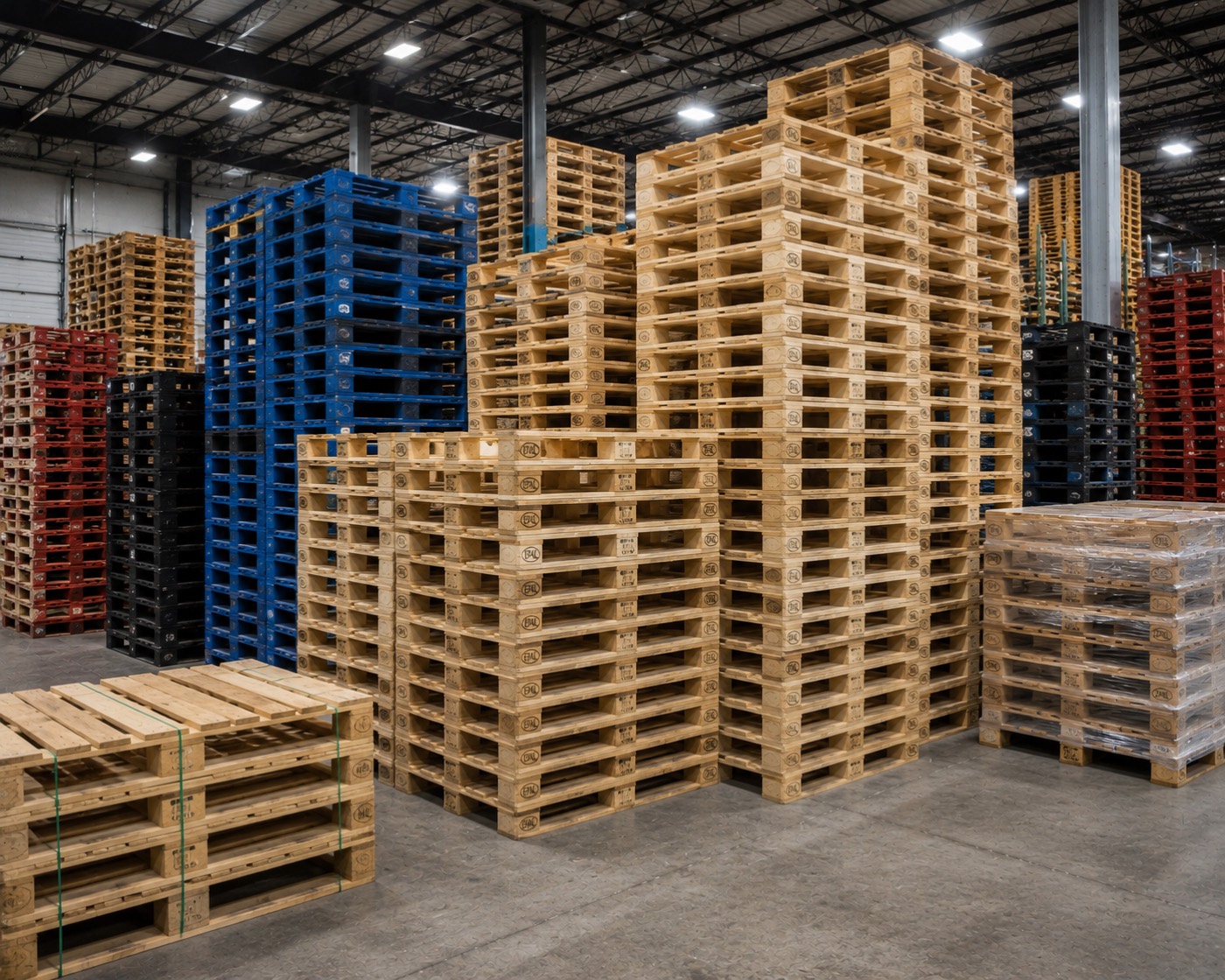
Dayton sits at the junction of I-70 and I-75, seventy-two miles down I-70 from our gate — close enough that we can run it more often than the other outlying markets, and frequently do.
Request a quote
Get Dayton pricing
Include your ZIP code and volume. We will confirm cadence and whether a two-way lane works for your site.
Local context
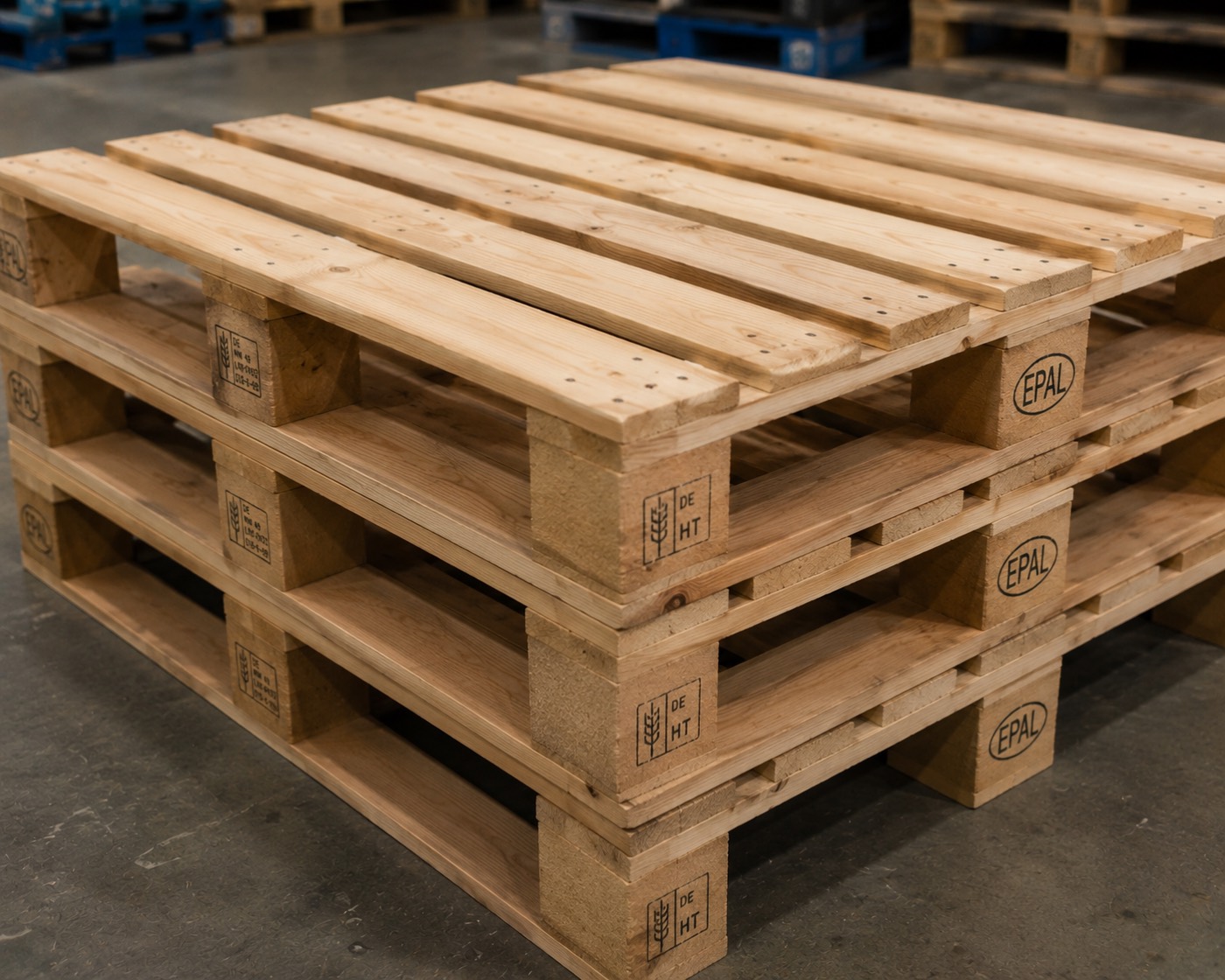
The local industrial base is precision-heavy: aerospace and defence suppliers around Wright-Patterson, automotive components, contract machining. That produces two distinct pallet requirements at once — high-value, documentation-sensitive shipments needing new stock with traceable material, and high-volume industrial movement that runs perfectly well on Grade B reclaimed.
Splitting a fleet between audited and industrial lanes
Aerospace and defence supply chains frequently specify new material with documented provenance. That requirement is real and we build to it. What is not real is applying the same specification to every pallet in the building, which is what usually happens.
The exercise takes an afternoon: list your lanes, mark which ones genuinely require documented material, and move everything else to reclaimed Grade B. Most Dayton operations we have done this with discover that 70–80% of their volume had no such requirement at all.
That split is the single largest saving available to a precision manufacturer, and it does not compromise anything. More in cut your pallet costs.
What we do for Dayton operations
- Deliver graded reclaimed and new pallets — 48×40 GMA plus twenty secondary footprints
- Buy your used cores — paid per core, counted on the ground
- Collect and remove pallet accumulation — often at no cost
- Documented zero-landfill recycling — with diversion reporting for ESG
- Repair and return captive fleets
- ISPM-15 heat treating and stamping for export loads
- Build custom pallets, crates and skids to your print
Industries we serve around Dayton
Aerospace and defence suppliers, Automotive components, Precision machining, Logistics and air freight, Healthcare distribution. If your sector is not on that list it does not mean we cannot help — it means we have not written the paragraph yet.
Districts and nearby towns
We regularly run into Vandalia, Miamisburg, Moraine, Huber Heights, Springboro, Wright-Patterson area, and serve nearby Kettering, Beavercreek, Huber Heights, Miamisburg, Springboro, Vandalia, Xenia, Troy. ZIP codes commonly served include 45401–45499, 45342, 45377, 45424.
Running the audited/industrial split
Dayton's aerospace, defence and precision manufacturing base creates a specific and expensive pattern: a genuine documentation requirement on some lanes, applied to every lane in the building.
The requirement itself is real. Some programmes need documented material provenance, and a reclaimed core has no traceable origin — that is not a fixable problem and we build new material for those lanes.
What is not real is applying it universally. The exercise takes an afternoon: list your lanes, mark which genuinely require documented material, and move everything else to reclaimed Grade B.
Most Dayton operations that do this find 70–80% of their volume had no such requirement. That is the largest single saving available to a precision manufacturer and it compromises nothing, because the lanes that need documentation keep it.
Frequency and why it matters here
Dayton is seventy-two miles down I-70 — close enough that we run it more often than the other outlying markets, frequently twice weekly.
That matters for two reasons. First, collection cadence can be tighter, which keeps idle piles small and keeps the stock in recoverable condition. Second, a shortage is a two-day problem rather than a week-long one.
It also makes Dayton one of the better markets for two-way lanes, because the return leg is short enough that the economics work even on moderate volumes.
Local sectors
What Dayton operations actually need from a pallet
Every market loads a pallet differently. These are the patterns we see here, and what each one changes about the specification.
Aerospace and defence supply
Documented material provenance on some programmes, which genuinely requires new build. The finding is almost always that the documented share is far smaller than the applied specification.
Precision machining
Dense, point-loaded parts in small quantities. Deck coverage and hardwood matter; footprint is frequently non-standard and worth building.
Automotive components
Returnable systems on sequenced lanes, ordinary freight on the rest. Splitting those two is the saving.
Distribution and fulfilment
Net pallet generators. Goods arrive on hundreds of supplier specifications and much of it cannot be reused internally. Usually a selling conversation before it is a buying one.
Healthcare distribution
Cleanliness and dry storage are the specification. Grade matters less than moisture and mold control.
Coverage
Miami Valley areas on the lane
| Area | Typical activity | Common requirement |
|---|---|---|
| Vandalia | Air freight, logistics | Weight-critical, fast cadence |
| Miamisburg | Precision manufacturing | Consistency and documentation |
| Moraine | Automotive, heavy manufacturing | Heavy loads, custom skids |
| Huber Heights | Distribution, light industrial | Standard footprints |
| Springboro | Contract machining, assembly | Mixed, some documented lanes |
| Wright-Patterson area | Aerospace and defence supply | Documented provenance on some lanes |
| Kettering / Beavercreek | Healthcare, light industrial | Cleanliness, appearance |
| Troy / Piqua | Manufacturing, food | Standard industrial duty |
Getting started
A first order or collection in Dayton
If you are buying
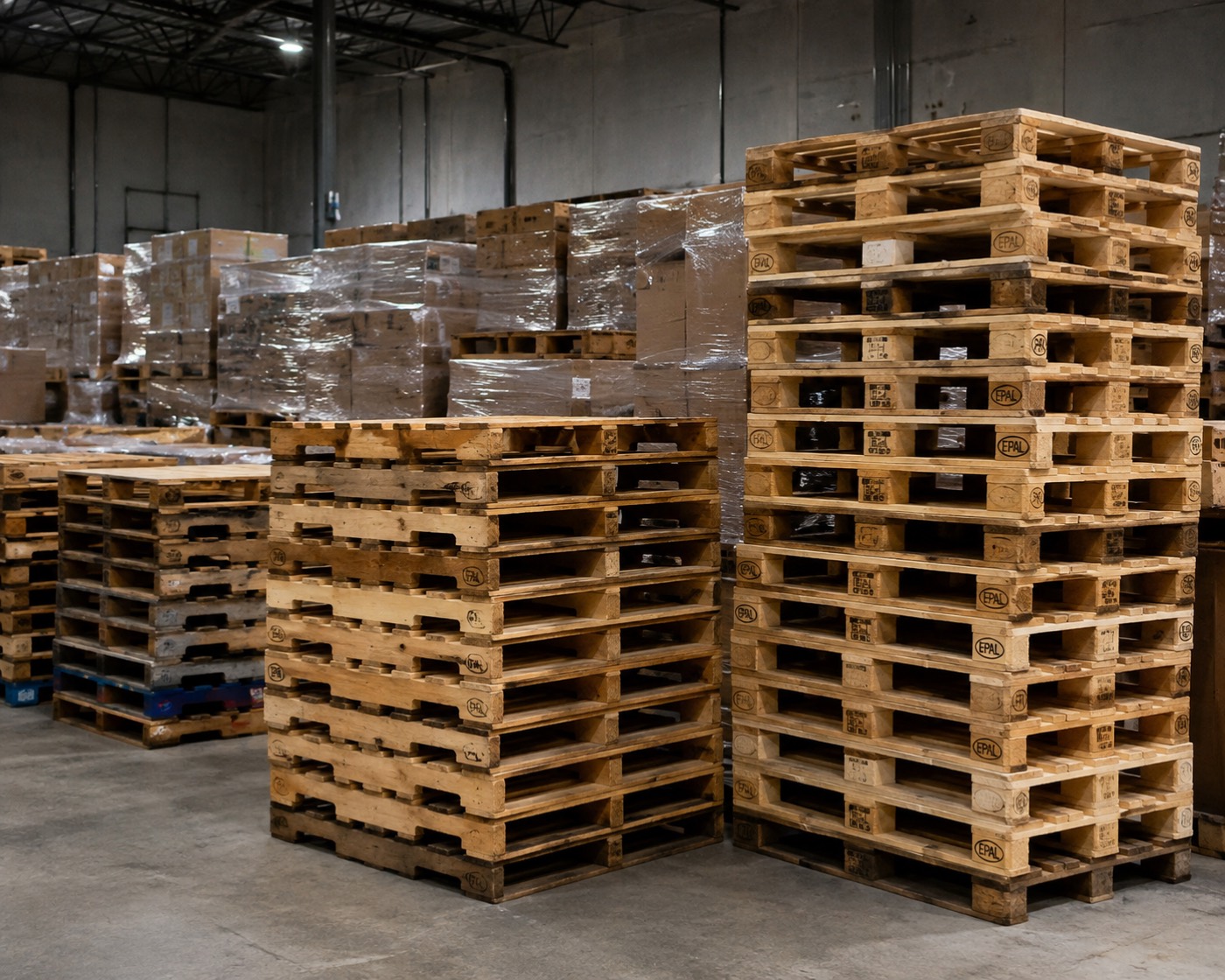
- Footprint and quantity, plus how often you would reorder
- Whether the pallet is racked, floor stacked or one-way
- Delivery ZIP and any dock or appointment restrictions
- Whether anything crosses an international border
- Whether you also generate used pallets
If you are selling or clearing
- Approximate count and roughly how many are 48×40
- Condition: mostly whole, mixed, or mostly broken
- Dry or stored outdoors, and for how long
- A photograph — it settles most questions instantly
- Forklift availability and trailer access
Questions
Pallets in Dayton — quick answers
Do you deliver pallets to Dayton?
Yes. Dayton and Montgomery County are served scheduled lane, typically weekly; often twice weekly from our Columbus yard at 7240 S Access Rd, Columbus, OH 43217. In-stock reclaimed pallets are the fastest; new builds run five to eight working days.
Will you collect used pallets from Dayton?
Yes, from about forty pallets upward. If the stock is standard-size, stacked and recoverable we frequently pay per core rather than charging for collection. Wet, contaminated or very small odd-size volumes may carry a service fee, quoted before we schedule.
How far is Dayton from your yard?
About 72 miles, roughly about 1 hour 15 minutes by truck from 7240 S Access Rd, Columbus, OH 43217. We run this as a scheduled lane, typically weekly; often twice weekly.
What pallet sizes do you stock for Dayton customers?
48x40 GMA in Grade A, Grade B and combo is always available, along with about twenty secondary footprints. Anything outside that we either source within a week or build to your specification.
How often do you run to Dayton?
Typically weekly and frequently twice weekly, down I-70. It is close enough that collection cadence can be tighter than in the further markets, which keeps idle piles small and stock in recoverable condition.
Can you supply pallets with documented material provenance?
Yes, on new builds — we can document species and source for programmes that require it. Reclaimed cores cannot carry that documentation, which is why those specific lanes stay on new material.
Do you buy used pallets in Dayton?
Yes. We buy sorted and unsorted cores, pay per core against grade, and count on the ground with your representative present. Sorted whole 48x40 GMA earns the most; mixed and odd-size loads still have value.
Can you provide diversion reporting for a Dayton site?
Yes. Per-collection records and period summaries cover tonnage, the reuse-repair-grind split, landfill tonnage and estimated CO2e avoided, calculated from coefficients we publish openly rather than hold as proprietary.
Nearby