Company · since 2009
We started by asking loading dock managers a question nobody asked.
Seventeen years later the answer still surprises people: the pallets stacked behind your building are not waste, they are inventory somebody is about to pay you to remove. This is how that turned into a yard.
Request a quote
Start a conversation
Same form as everywhere else on this site. It reaches the same people.
In short
RePallets Ohio has been buying, rebuilding and reselling wood pallets from Columbus since 2009. We began as a two-person collection operation, added a repair line in 2013, ISPM-15 treatment in 2015, and reached a documented zero-landfill route in 2019.
We buy before we sell, which is unusual. It means our reclaimed inventory is our own rather than a broker’s, and it is the reason our pricing on both sides holds up.
Timeline
Seventeen years, told properly
Including the year we nearly ran the business into the ground by buying faster than we could sort.
One truck, one bad idea that turned out to be a good one
Two people, a leased flatbed and a theory: that Central Ohio's distribution boom was producing more usable wood than anyone was collecting. The first year was spent driving to loading docks and asking what happened to the pallets. The answer was almost always 'the waste hauler takes them', and almost always said with a shrug.
The first yard, and the first hard lesson
Two acres off Alum Creek Drive. We bought aggressively, sorted badly and learned expensively that a pallet yard is a sorting business, not a hauling business. A trailer of unsorted cores is not inventory; it is a problem you paid for. That year taught us to grade before we buy, not after.
The repair line
Until then, anything damaged got dismantled. Setting up a dedicated repair line changed the economics of the entire operation overnight — roughly four in five inbound cores turned out to be repairable, and a repaired pallet is worth several times its component lumber. It also, incidentally, made us a genuinely circular business rather than a recycler with good intentions.
Heat treatment, because a customer nearly lost a container
A long-standing customer had an export shipment held at port over untreated blocking timber. It cost them three weeks and a great deal of money. We installed ISPM-15 treatment capacity the following quarter, mostly so that conversation would never happen again.
Moving to S Access Rd
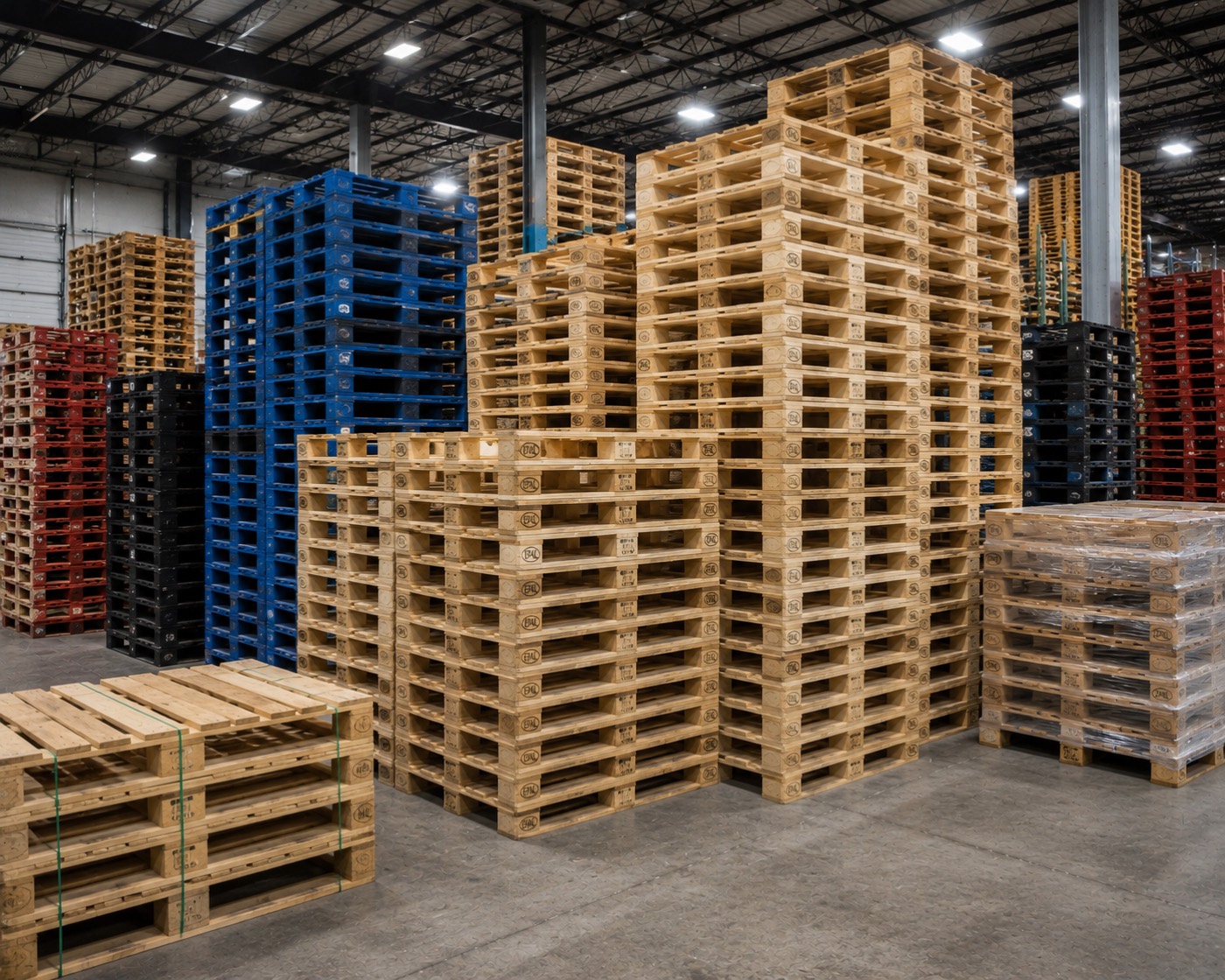
The current yard at 7240 S Access Rd, sized for a proper grading line, a repair bay, a treatment chamber and enough hard standing to stage a week of inbound. Being minutes from Rickenbacker meant our inbound stream and our outbound customers were finally in the same place.
The last load to landfill
We stopped sending pallet wood to landfill entirely. Not through a grand initiative — through the boring accumulation of a grinder, a mulch colouring line, a magnet on the outfeed and a biomass offtake agreement. Zero landfill is not a slogan here. It is four pieces of equipment and one contract.
Managed programmes
Multi-site customers kept asking the same question: who owns our total pallet number? Nobody did. We started running baseline audits across whole organisations and found, repeatedly, one site buying new pallets while another paid to dispose of them forty miles away.
Publishing the arithmetic
We built the Repallet Ledger and published every coefficient behind it. Plenty of people told us not to — a green number is more persuasive when nobody can check it. That is exactly why we published.
What we believe
Four positions we will not trade away.
Reuse beats recycling, every time
Grinding a repairable pallet into mulch is technically recycling and practically a waste. We repair first and grind last, and we will tell a customer when their ‘recycling’ programme is doing the wrong thing.
Say when the cheaper option is right
We sell Grade A. We also tell customers that most of their volume does not need it. Losing 20% of an order and keeping the account for a decade is the better trade.
Publish the arithmetic
Every environmental coefficient we use is on the methodology page, including the ones that make our numbers smaller. A figure nobody can audit becomes a retraction eventually.
Count on the ground
Every inbound and outbound load is counted physically, with your person present, before anyone signs. It costs fifteen minutes and it has saved a great many relationships.
The part we get asked about most
Why there is no phone number anywhere on this site.
Because we do not have one, and that is deliberate. A pallet yard is loud, dusty and spread across acres; a phone call reaches somebody who is not standing where the answer is. Email reaches the person who is, and it puts the specification in writing where it cannot be misheard.
Quotes, counts, grades and delivery windows all end up documented. Nobody waits on hold. Write to info@repalletsohio.com or use any form on this site — a person reads it, usually within a few working hours.
Keep reading
The rest of the company
Inside the yard
A walk from the inbound gate to the mulch pile, with the people who do it.
Sustainability
Our position on reuse, and the numbers behind it.
The Repallet Ledger
Model your own footprint with our published coefficients.
Careers
Open roles at the Columbus yard.
Services
The nine things we actually do.
Contact us
Address, email, hours and directions.
Questions
Common questions
When did RePallets Ohio start trading?
In 2009, with two people and a leased flatbed, driving to Central Ohio loading docks and asking what happened to the pallets.
Why do you grade pallets before buying them?
Because a trailer of unsorted cores is not inventory. Our first yard taught us expensively that a pallet yard is a sorting business, not a hauling business.
How long have you offered ISPM-15 heat treatment?
Since 2015. We installed treatment capacity the quarter after a long-standing customer lost three weeks to an export shipment held at port over untreated blocking timber.
What does zero landfill actually mean here?
Since 2019 no pallet wood leaves us for landfill. It came from equipment rather than intent: a grinder, a mulch colouring line, a magnet on the outfeed and a biomass offtake contract.
Why did you move the yard to S Access Rd?
The 2017 move gave us room for a proper grading line, a repair bay, a treatment chamber and a week of staged inbound, minutes from the Rickenbacker corridor.