Yard notes
Why we count on the ground
Almost every pallet count dispute we have ever seen was an honest mistake. That is exactly why the process has to be physical.
Request a quote
Talk to the people who wrote this
Same form, same inbox. Technical questions get answered whether or not there is an order attached.
In short
Every inbound and outbound load at our yard is counted physically on the ground with the other party present, before anyone signs. Discrepancies are photographed and resolved on the spot rather than argued about later.
This is not a trust issue. Pallet counts are genuinely difficult to get right on a stacked, moving load, and a fifteen-minute physical count removes a whole category of dispute that otherwise ends relationships.
Why the count goes wrong so often
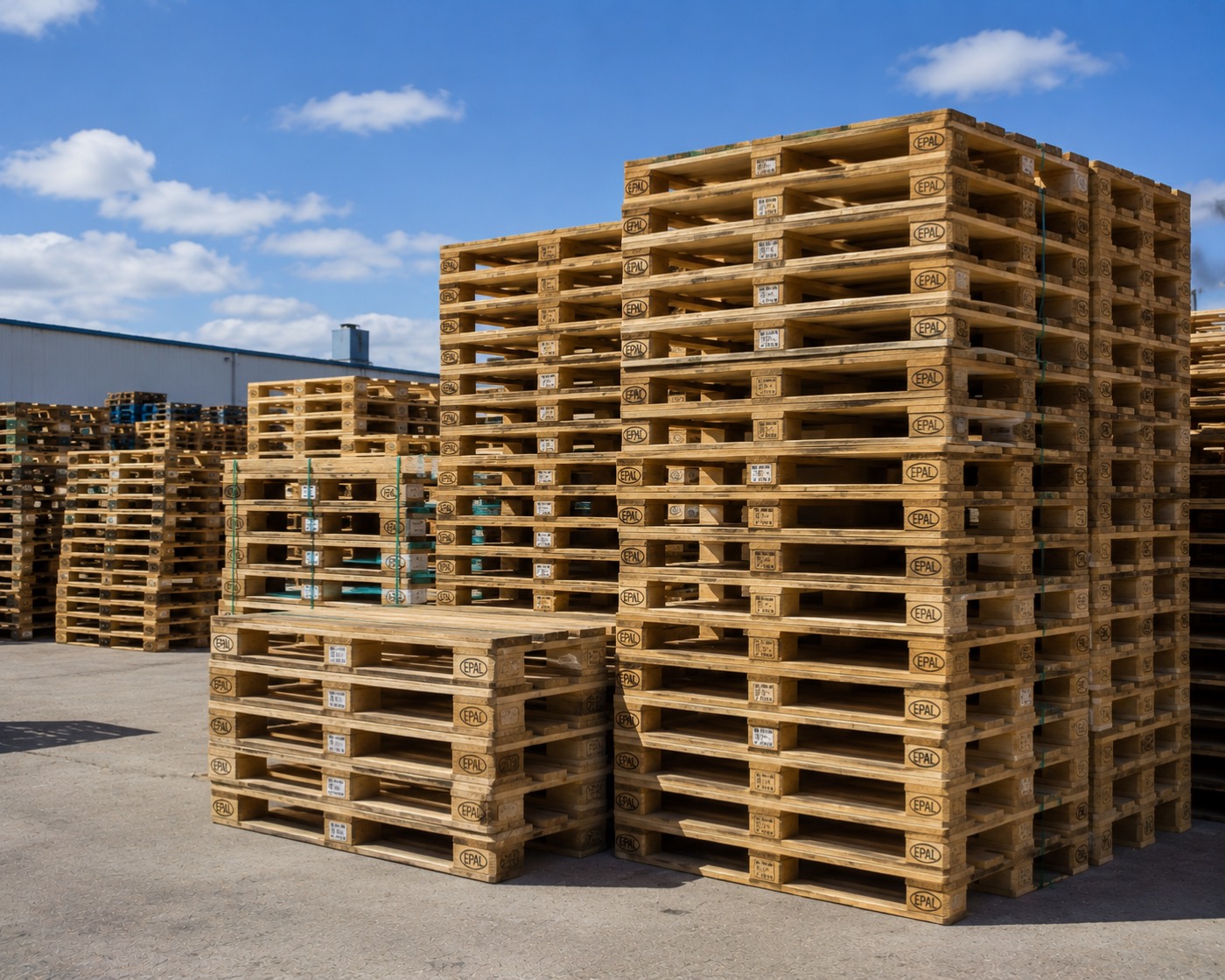
Pallets are stacked, banded and loaded quickly. A stack that should be fifteen is sometimes fourteen because one was pulled for a repair and nobody adjusted the tally. Two stacks lean together and get counted as one. A partial stack at the back of a trailer gets estimated rather than counted.
None of this is dishonesty. It is what happens when a countable object is stacked eight feet high in a dark trailer and somebody is trying not to hold up a driver.
The trouble is what happens next. The receiving site counts a different number, the invoice reflects a third, and by the time anyone investigates, the load has been broken down and dispersed across a warehouse. At that point nobody can prove anything, and two organisations that were getting along fine start distrusting each other over forty pallets.
How the count actually runs
- The load comes off onto the hard standing rather than being counted in the trailer.
- Both parties are present. The driver stays; your person watches.
- Stacks are counted, not estimated. Partial stacks are broken and counted individually.
- Anything unexpected — a wet stack, a mixed footprint, damage — is photographed there and then.
- The agreed number goes on the paperwork before anyone signs.
It takes about fifteen minutes on a full load. That is the entire cost of the system.
Why we photograph
A photograph taken at the point of exchange settles almost everything. Not because anyone expects to litigate, but because memory is unreliable and two people can genuinely remember a load differently a week later.
The most useful photographs are the boring ones: the stack as it came off, the condition of the bottom layer, anything that was not what was described. If we are collecting cores and a third of the load is soaked, that photograph is why the price conversation is straightforward rather than adversarial.
It works in both directions. If we deliver a load that does not match the grade quoted, your photograph is what makes the credit immediate rather than negotiated.
What this means for you
Have somebody available at the exchange. Not for the whole visit — for the count.
If your site cannot spare a person, tell us, and we will photograph the count as we make it and send it with the paperwork. That is second best but it is far better than nothing.
And if a number ever looks wrong on an invoice, raise it. Our count records and photographs exist precisely so that question has an answer rather than a negotiation.
Takeaways
- Count disputes are almost always honest errors, which is why the fix has to be procedural.
- Counting happens on the ground, not in the trailer.
- Photographs at the point of exchange settle disagreements before they form.
- The whole system costs about fifteen minutes on a full load.
Questions
Asked and answered
What if we cannot have someone present for the count?
Tell us in advance and the driver photographs the count as it is made and sends it with the paperwork. It is second best, but far better than an unwitnessed estimate.
What happens if the count is wrong on the invoice?
Raise it. The invoice should reflect the number agreed on the ground, and the count record and photographs exist so the question has a factual answer.
Written by
Dale Whitmer
Yard Manager
Runs the grading line and the repair bay. Has graded more pallets than he can estimate and still argues about deck coverage.
Disagree with something here? That is genuinely useful to us — several of these articles exist because a customer told us we had it wrong. Use the form at the top of the page or write to the yard directly.
Terms used here
Definitions live in one place so they cannot drift. Full list in the pallet glossary.
- Core
- An unsorted used pallet as received from a generator, before grading. The raw material of a pallet yard.
Keep reading
Related notes
How to read a pallet invoice
Most pallet invoices are six lines long and four of them are worth interrogating. Here is what each one should say.
Yard notesNinety seconds on the grading line
The whole economics of a pallet yard rest on a judgement made in about ninety seconds. Here is what is going through the grader's head.
Buying & costThe two-way lane, and why it beats any price negotiation
A truck that arrives full and leaves empty has wasted half its journey. Somebody pays for that half whether or not it appears on an invoice.