Compliance
The fire engineer's view of your pallet stack
Wood pallets are close to an ideal fuel array. That is not rhetoric — it is why they get their own commodity classification.
Request a quote
Talk to the people who wrote this
Same form, same inbox. Technical questions get answered whether or not there is an order attached.
In short
Idle pallet storage is treated as its own commodity class in warehouse fire protection because a stack of pallets combines high surface area, open vertical voids that act as chimneys, and air access on every face. It reaches full involvement far faster than the same mass of solid timber.
Plastic pallets raise the fire load higher still. Switching a fleet from wood to plastic without checking your sprinkler design is a genuine and commonly overlooked risk.
Why the geometry matters more than the material
Take the wood in a pallet and cast it as a solid block. It burns slowly — a fire has to work inward from the surface, and there is not much surface relative to the mass.
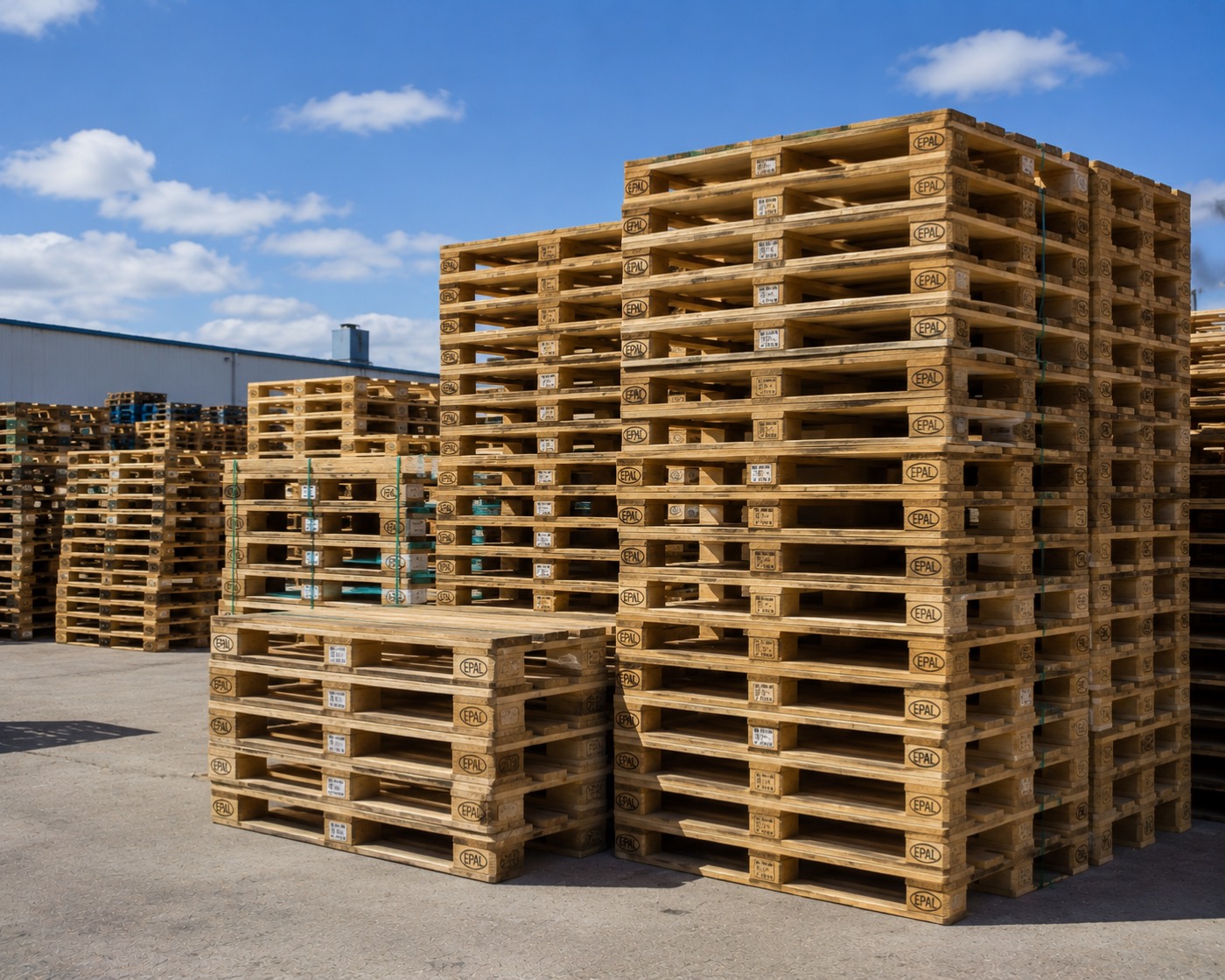
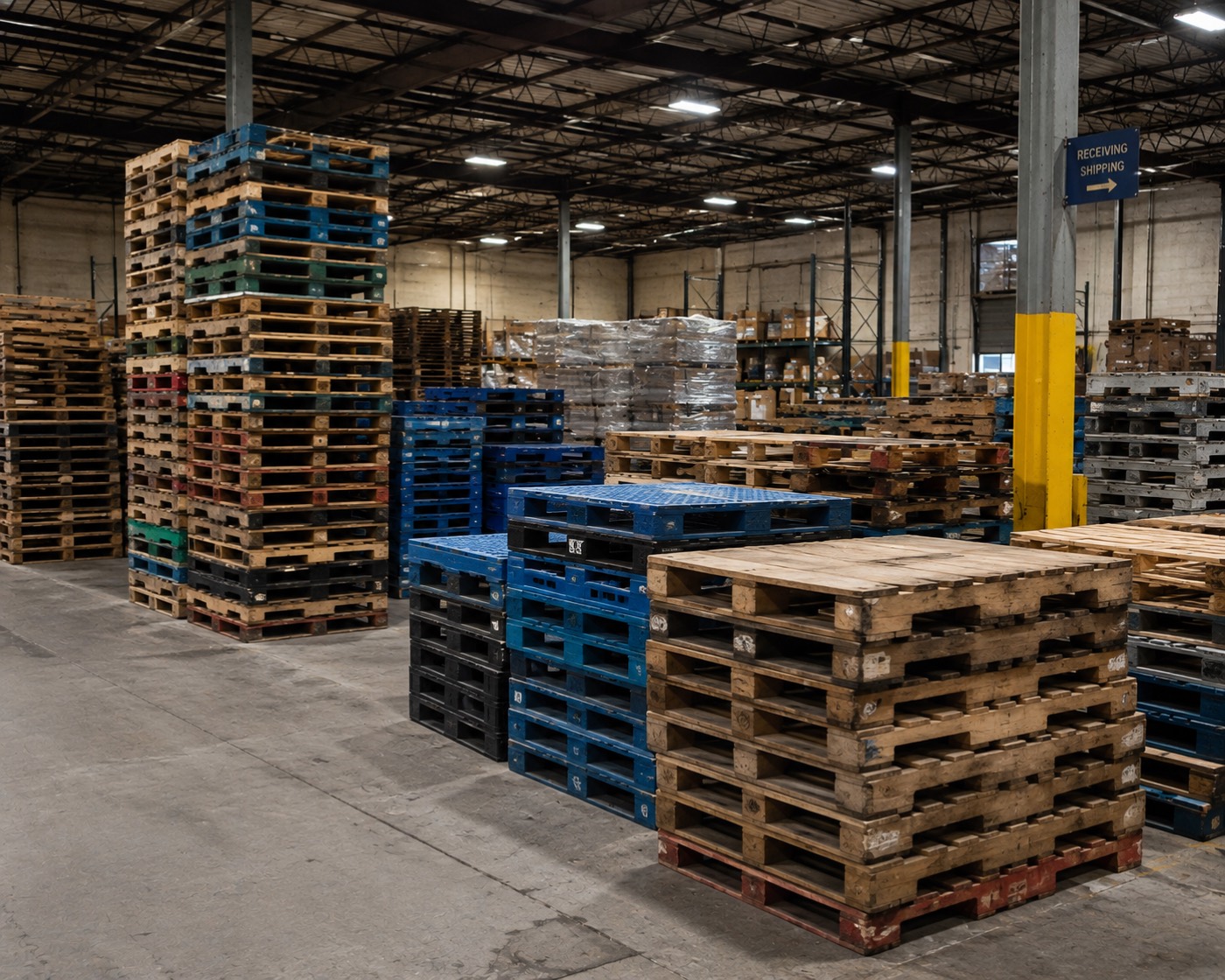
Now cut that same wood into 5/8-inch deck boards with gaps between them and stack it on stringers with open voids underneath. You have multiplied the surface area many times over and given air access to all of it. Stack those pallets and the voids between the decks line up into vertical flues that draw flame upward.
This is why fire protection standards treat idle pallet storage separately rather than lumping it in with 'wood products'. The commodity is not really wood. It is a carefully engineered fuel array that happens to be useful for moving freight.
What an inspector looks at
Specific limits vary by jurisdiction and by your building's sprinkler design, so treat this as orientation and check with your local authority having jurisdiction.
- Indoor idle storage height and quantity, relative to the sprinkler protection actually installed
- Separation between idle pallet storage and other stored commodities
- Outdoor setback from buildings, property lines and combustible construction
- Pile height and spacing outdoors
- Egress and access — nothing blocking doors, aisles, hydrants or fire department approach
- Housekeeping — no accumulation of broken pallets, banding, film and debris
The recurring theme is that pallets are treated as *stored commodity*, not as *equipment*. A pile that has been growing quietly for a year is inventory in the eyes of an inspector, and it has to be protected like inventory.
The plastic pallet trap
This one catches operations that made an otherwise sensible decision.
A plastic pallet carries a materially higher fire load than a wooden one of the same size, and it behaves differently — it melts and produces flowing burning material rather than holding its shape. Fire protection standards reflect that with a different, more demanding classification.
A building sprinklered for idle wood pallet storage may not be adequately protected for the same quantity of plastic pallets. If you are considering a fleet switch — and there are good reasons to, covered in plastic pallets — the conversation with your fire engineer should happen before the purchase order, not after.
The fix is boring
Almost every idle-pallet citation we hear about traces to accumulation rather than to a deliberate storage decision. Nobody chose to keep four hundred pallets against the north wall; it just happened over eight months.
Set a removal cadence matched to your generation rate so the stack never reaches a size anyone has to assess. For most sites that is weekly or biweekly.
Then stop paying to dispose of it. If the stock is standard-size and recoverable, we buy it rather than charging to take it away — see sell us your pallets. Solving a compliance problem and a revenue problem with the same truck is a rare thing.
Takeaways
- Pallet stacks burn fast because of geometry — surface area and vertical flues — not because wood is unusual.
- Idle pallet storage is a distinct commodity class in sprinkler design.
- Plastic pallets carry a higher fire load and may exceed a system designed for wood.
- Most citations come from slow accumulation, not from a deliberate decision.
Questions
Asked and answered
How high can pallets be stacked indoors?
It depends entirely on your sprinkler design and local code. There is no universal number. The practical answer for most sites is to keep idle storage small enough that the question does not arise.
Are plastic pallets a bigger fire risk than wood?
Yes. They carry a higher fire load and behave differently under fire, and warehouse sprinkler classifications reflect that. Check with a fire engineer before switching a fleet.
Written by
Priya Raghunathan
Operations & Programs
Builds the multi-site pallet programmes and does the baseline audits. Keeps the spreadsheets everybody else quotes from.
Disagree with something here? That is genuinely useful to us — several of these articles exist because a customer told us we had it wrong. Use the form at the top of the page or write to the yard directly.
Terms used here
Definitions live in one place so they cannot drift. Full list in the pallet glossary.
- Deck board
- A horizontal board forming the load-bearing surface of a pallet.
- Stringer
- A lengthwise structural member, typically 1⅜″ × 3½″, forming the spine of a stringer pallet.
Keep reading
Related notes
How to stack pallets outdoors so they are still worth something
Fifteen minutes of housekeeping routinely moves a load from 'we will remove this for free' to 'we will pay you for this'.
Yard notesWhat an Ohio winter does to a pallet stack
A pile worth real money in October is worth a fraction of it by April. The mechanism is entirely predictable and almost entirely preventable.
Buying & costThe two-way lane, and why it beats any price negotiation
A truck that arrives full and leaves empty has wasted half its journey. Somebody pays for that half whether or not it appears on an invoice.