Compliance
Five ISPM-15 holds we have watched happen
In every case the pallet was compliant. That was never the problem.
Request a quote
Talk to the people who wrote this
Same form, same inbox. Technical questions get answered whether or not there is an order attached.
In short
Almost every ISPM-15 hold we have seen traces to one of five causes: untreated blocking or bracing added at the last minute, treated and untreated stock stored together, a repair made after treatment, a mark that is obscured or illegible, or residual bark.
Note what is not on that list: a pallet that was never treated. The failures are almost always at the edges of the process, not at the centre.
1. The untreated 2×4
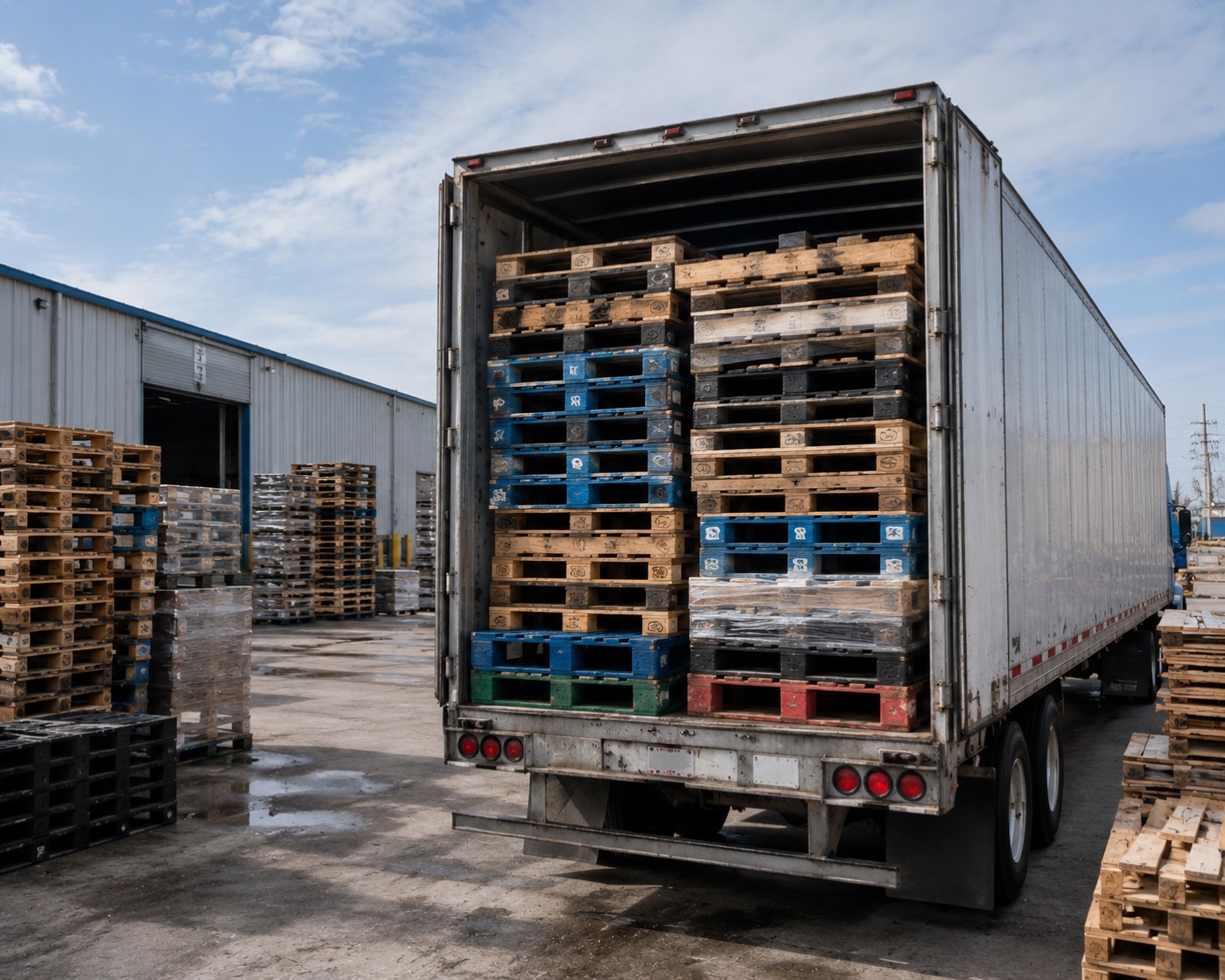
This is the most common by a wide margin. The pallets are treated and stamped. The load is built. Somebody on the dock decides it needs bracing, walks to the scrap rack, and grabs a length of untreated timber.
Customs does not assess a consignment pallet by pallet. All solid wood packaging in the shipment falls under the standard — pallets, crates, skids, dunnage, blocking and bracing. One untreated piece makes the consignment non-compliant.
The fix is trivial and organisational: order treated blocking timber with the pallets, store it with them, and physically remove untreated scrap from anywhere near an export dock.
2. Mixed storage
Treated and untreated pallets stacked in the same area, distinguished only by a stamp that is hard to see when stacked.
Sooner or later somebody in a hurry loads from the wrong stack. Not through carelessness — through the ordinary reality that two identical-looking stacks of wood four feet apart will eventually be confused.
Segregate physically, not by label. Different bay, different aisle, ideally a different part of the building. If that is not possible, band or wrap treated stock in a distinguishing colour so the difference is visible from across the yard rather than from arm's length.
3. Repair after treatment
A treated pallet loses a deck board. Somebody replaces it with untreated lumber and puts the pallet back in the export stack. The mark is still there. The pallet is no longer compliant.
This is a genuine trap because the repair is well intentioned and the pallet looks fine. The rule is simple: any solid wood added to a treated item must itself be treated, and a repaired pallet must be re-treated and re-marked, or the old mark removed.
We re-treat and re-stamp repaired export stock as standard. If you repair in house, either use treated lumber or take the pallet out of the export pool.
4. Marks you cannot read
A mark hidden by the load, painted over, worn away by handling, or applied to a surface that faces inward is treated as no mark at all.
The standard requires the mark on at least two opposite sides, and there is a practical reason: an inspector should be able to see it on a stacked, loaded pallet without dismantling anything.
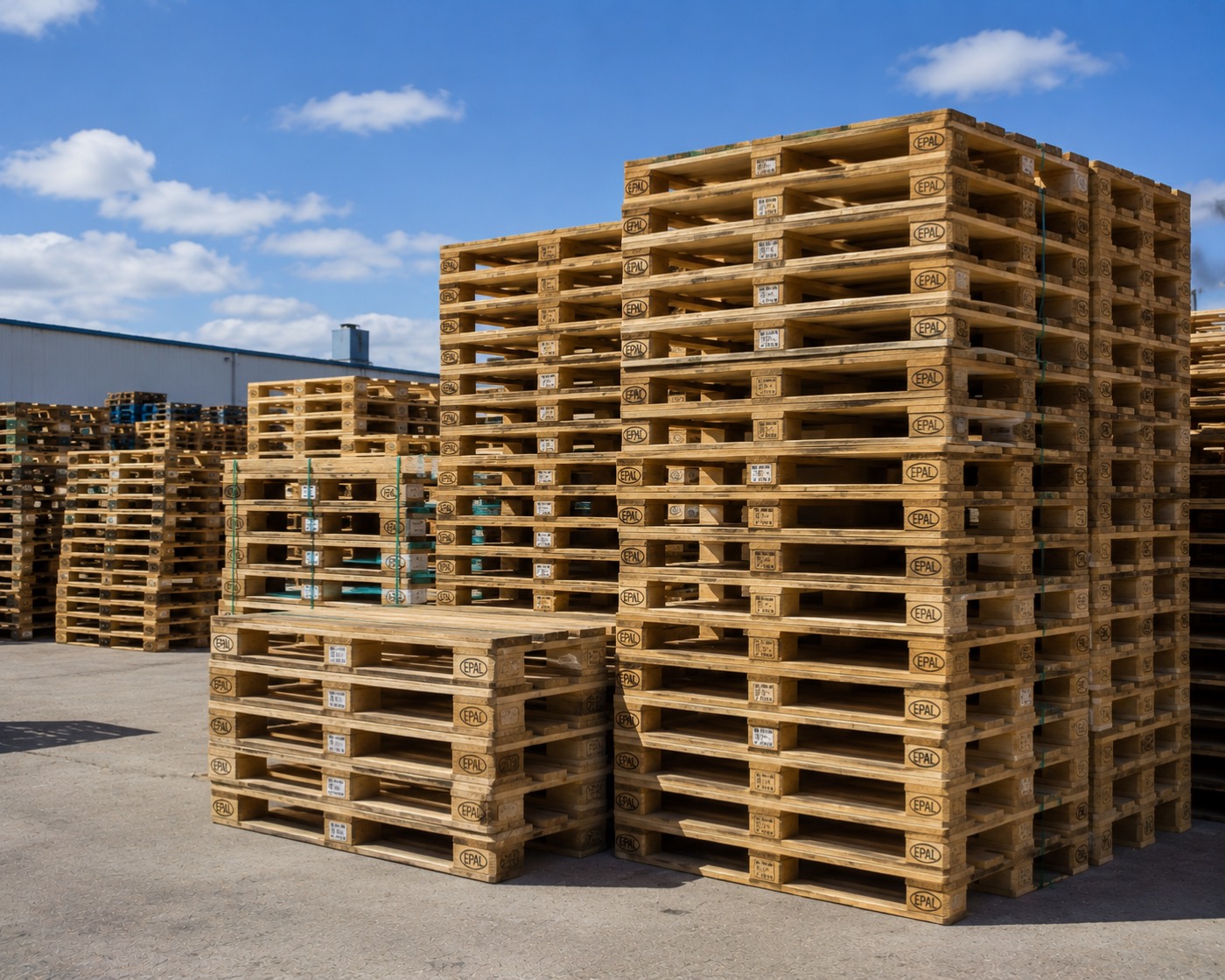
We stamp on the stringers, positioned to stay visible when the pallet is loaded, and always after treatment rather than before. Pre-stamping is how counterfeit marks enter circulation, and a pre-stamped pallet that then fails a charge is a compliance failure waiting to be discovered at a port.
5. Bark
Wood must be debarked before treatment. Small residual patches are tolerated within defined limits, but a piece of packaging with visible bark attracts attention immediately — bark is where many of the pests the standard exists to stop actually live.
This one mostly affects crating and dunnage cut from rough stock rather than pallets, which are made from milled lumber. If you are building crates or bracing from farm lumber or salvaged timber, check it.
Background on the standard itself in ISPM-15 explained, and the service in heat treating.
Takeaways
- All solid wood in a consignment counts, including bracing added at the last minute.
- Segregate treated stock physically rather than by label.
- Repairing a treated pallet with untreated wood invalidates the mark.
- Marks go on two opposite sides, after treatment, positioned to stay visible when loaded.
Questions
Asked and answered
Does one untreated piece really fail a whole shipment?
Yes. Customs assesses the consignment, not individual items. A compliant pallet under a load braced with untreated timber is a non-compliant consignment.
What happens if a shipment is held?
The receiving country can order fumigation at your cost, require re-export of the whole consignment, or destroy the packaging. Delays of one to three weeks are typical and the cost usually far exceeds the value of the packaging.
Written by
Dale Whitmer
Yard Manager
Runs the grading line and the repair bay. Has graded more pallets than he can estimate and still argues about deck coverage.
Disagree with something here? That is genuinely useful to us — several of these articles exist because a customer told us we had it wrong. Use the form at the top of the page or write to the yard directly.
Terms used here
Definitions live in one place so they cannot drift. Full list in the pallet glossary.
- Deck board
- A horizontal board forming the load-bearing surface of a pallet.
- Dismantling
- Cutting a pallet apart to recover usable deck boards and stringers, usually on a band saw.
- Dunnage
- Loose timber used to brace, block and protect freight in transit. Falls under ISPM-15 for export.
- ISPM-15
- The international standard governing treatment and marking of wood packaging in international trade.
- Skid
- A pallet with a top deck only, sitting on runners. Easier to drag, not compatible with a standard pallet jack.
- Stringer
- A lengthwise structural member, typically 1⅜″ × 3½″, forming the spine of a stringer pallet.
More in Compliance
Keep reading
Related notes
Dunnage: the compliance blind spot
Everybody knows the pallet needs a stamp. Almost nobody thinks about the offcut wedged against the load to stop it sliding.
ComplianceYour first export container: the packaging checklist
The goods are the easy part. It is the wood around them that decides whether the container moves or sits.
Specs & engineeringYour pallets keep breaking in the same place. Here is why.
Nine times out of ten a failed pallet has cracked in the same three inches of wood. It is not bad luck and it is not cheap lumber.