Removal · safety
Warehouse pallet storage & fire code
Idle pallet storage is one of the most commonly cited issues in industrial fire inspections, and one of the easiest to fix. This page is what an inspector is looking at.
Request a quote
Tell us what you need
Send this and a real person in the Columbus yard reads it. Most quotes go out the same business day.
In short
Idle pallet storage is treated seriously in fire code because wood pallets are a high fire-load material that burns fast, and stacked pallets provide both fuel and a vertical flame path. Indoor idle storage is generally limited in height and quantity and must be separated from other storage; outdoor stacks must be set back from buildings and property lines.
The practical fix is not more space. It is a scheduled removal route so the pile never accumulates. See pallet removal & pickup.
Why fire officials care so much about pallets
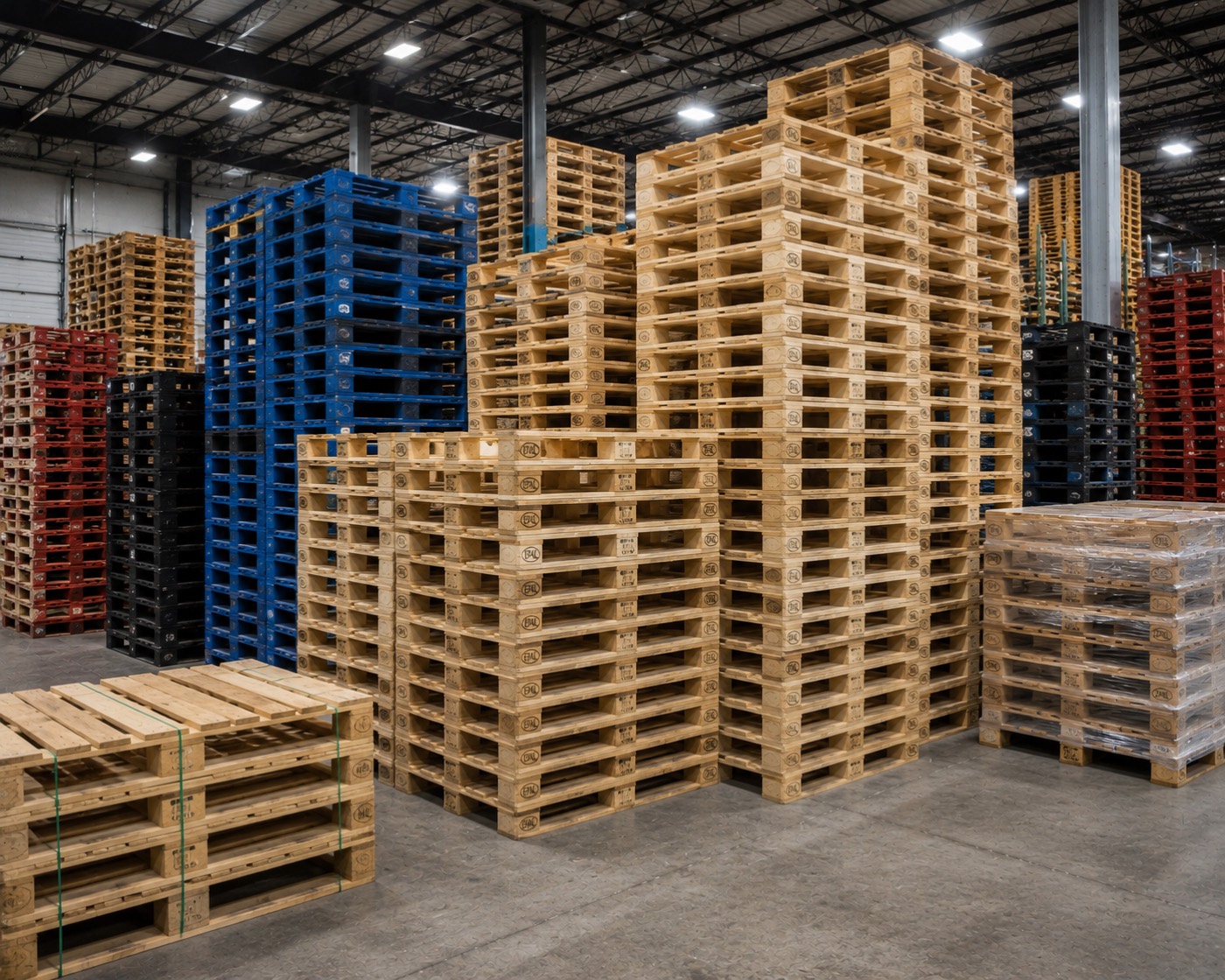
A stack of wood pallets is close to an ideal fuel array. The deck gaps admit air on all sides, the vertical voids between stringers act as chimneys, and the surface-area-to-mass ratio is far higher than for solid timber. A pallet stack reaches full involvement dramatically faster than the same mass of solid wood.
That is why sprinkler design classifications treat idle pallet storage as its own category, and why a building sprinklered for one commodity class can be non-compliant simply because pallets accumulated in it. Plastic pallets raise the fire load further still — a genuine consideration before switching a fleet, and one covered on plastic pallets.
None of this is exotic. It is simply why the pile matters more than its scrap value suggests.
What inspectors typically look for
Requirements vary by jurisdiction and by your building's sprinkler design, so treat this as orientation rather than as code. Check with your local authority having jurisdiction.
- Indoor idle storage limits on stack height and total quantity, depending on sprinkler protection
- Separation distance between idle pallet storage and other stored commodities
- Outdoor setback from buildings, property lines and combustible construction
- Stack height limits outdoors, and separation between piles
- Clear egress and access — pallets must not obstruct doors, aisles, hydrants or fire department access
- Housekeeping — no accumulation of broken pallets, banding, film or debris
The problems that are not fire
Pests. An outdoor pallet stack is prime harbourage for rodents and stinging insects. In food and pharmaceutical facilities that alone can fail an audit.
Mold and moisture. Pallets stored uncovered through an Ohio winter absorb water, grow mold, and then carry it back into your building the next time somebody reuses one. Wet pallets also lose grade fast and are worth much less when we collect them.
Space. Yard space has a real cost per square foot. A pile that has been growing for two years is occupying paid area with a depreciating asset.
Value. Pallets left outdoors lose recoverable value every month. A stack worth real money in June is worth considerably less by March.
The fix, which is boring and effective
Set a removal cadence that matches your generation rate, so the pile never reaches a size anyone has to think about. For most sites that is weekly or biweekly.
Keep the staging area covered or indoors where possible, keep it away from the building line, keep broken pallets in a separate stack, and keep film and banding out of it. Those four habits raise what the load is worth and remove the compliance question at the same time.
Then stop paying to dispose of it. If the stock is standard-size and recoverable we buy it rather than charging to take it away.
Turning this into a standing procedure
Fire-code compliance on idle pallets fails through accumulation, not through decisions. So the control has to be a rhythm rather than a rule.
- Set a maximum stack size in a visible place — a painted line on the ground is more effective than a number in a document.
- Set the collection cadence tighter than the generation rate, so the line is never reached.
- Nominate an owner. One person who notices when the pile is growing and can call a collection.
- Include it in the weekly walk. Alongside egress and housekeeping, which it belongs with.
- Keep broken pallets separate, because they accumulate faster and nobody ships them.
- Photograph the area monthly. A month-on-month comparison shows drift that daily familiarity hides.
Reference
Risk factors ranked
| Factor | Why it matters |
|---|---|
| Stack against a building wall | Provides fuel and a vertical flame path directly against structure |
| Blocking egress, hydrants or fire lanes | Cited immediately; also directly dangerous |
| Indoor idle storage beyond sprinkler design | Commodity class may exceed system capability |
| Plastic pallets stored as wood | Higher fire load than the system was designed for |
| Broken pallets and debris mixed in | Increases surface area and ignition risk |
| Outdoor pile against a property line | Setback requirements; exposure to neighbours |
| Pile stored on mud, wicking moisture | Mold and pest harbourage, value loss |
Avoid these
Mistakes we see
Managing it as a one-off clearance
Clearing a pile that has grown for a year solves it for a month. A cadence solves it permanently and costs less per pallet.
Switching to plastic without checking sprinkler design
Plastic carries a higher fire load and a more demanding classification. The check belongs before the purchase order.
Storing pallets in the fire lane 'temporarily'
Temporary storage in an egress route is the most commonly cited and most consequential version of this problem.
Checklist
Work through this before you order
Weekly walk
- Pile within the painted line
- Nothing against the building wall
- Egress, hydrants and fire lanes clear
- Broken pallets separated
- No film, banding or debris accumulation
- Stack square and off the ground
- Collection scheduled if approaching the line
Questions
Before you ask us
How high can pallets be stacked outdoors?
Limits vary by jurisdiction and by proximity to buildings and property lines. Check with your local authority having jurisdiction. The practical answer for most sites is to keep the pile small enough that the question does not arise.
Are plastic pallets a bigger fire risk than wood?
Yes. Plastic pallets carry a materially higher fire load, and warehouse sprinkler design classifications reflect that. Switching a fleet from wood to plastic without checking sprinkler design is a serious oversight.
Do wet pallets lose value?
Considerably. Water absorption promotes mold, reduces stiffness and takes stock out of the recoverable grade stream. A pile left uncovered through a winter can lose most of its resale value.
How often should pallets be removed?
Often enough that the stack never becomes a stored commodity anyone has to assess. For most sites that means weekly or biweekly collection matched to the generation rate.
Does this apply to a small site with fifty pallets?
The compliance thresholds may not, but the pest, moisture and value arguments do. Fifty pallets stored badly for a year are worth considerably less than fifty stored well for a month.
Keep going
Related pages